


Industrial Workbench v2
Discover the Strength and Functionality of Industrial Workbenches.
Industrial workbenches are designed to meet the demands of modern workspaces, providing durable, ergonomic, and customizable solutions of various industries.
Built for efficiency and adaptability, these workbenches serve as essential stations in manufacturing plants, laboratories, assembly lines, and technical workshops. With customizable configurations, integrated storage options, and heavy-duty materials, they enhance productivity and organization in any workspace.
Unlike standard tables, industrial workbenches are engineered for high-performance tasks, offering reinforced surfaces, adjustable heights, and modular add-ons. Whether you need a workstation for electronics assembly, heavy machinery support, or precision work, these solutions ensure stability, durability, and efficiency in every environment.
Group 1
-
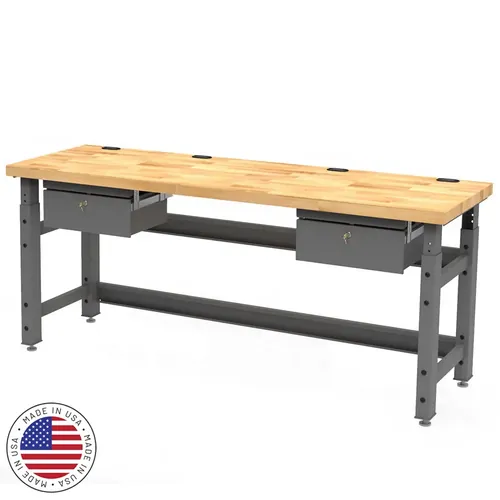
Adjustable Height Workbench With Lockable Drawers 72W x 24D
-
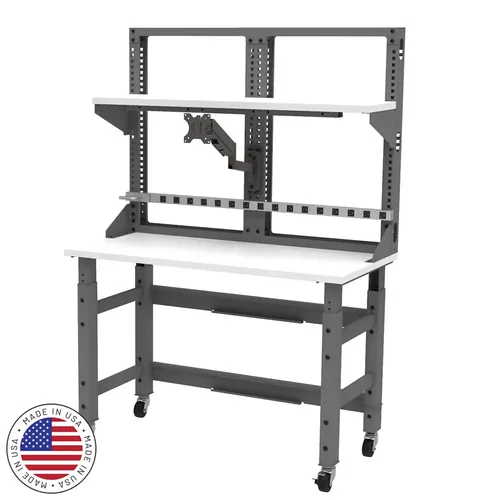
Adjustable Height Workbench With Monitor Mount 48W x 24D
-
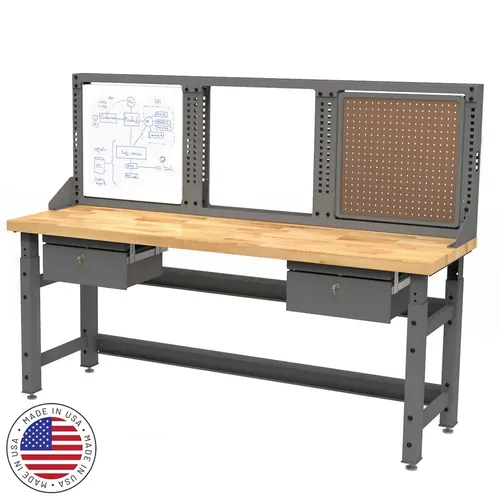
Industrial Workbench With Organizer Panels 72W x 24D
-
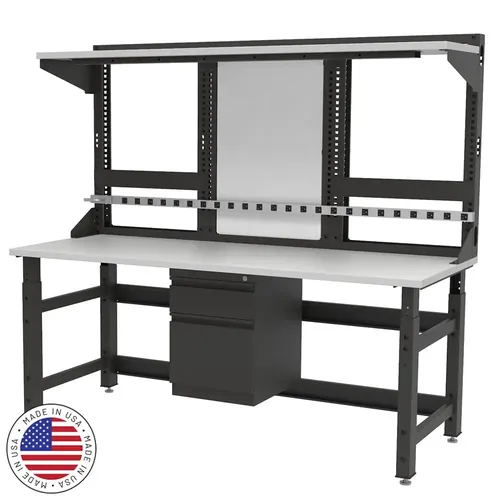
Industrial workbench With Storage 72W x 30D
-
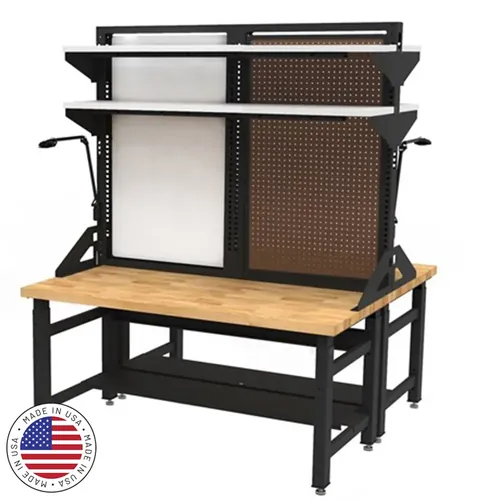
Back To Back Bench With Tool Organizer 60W x 30D
-
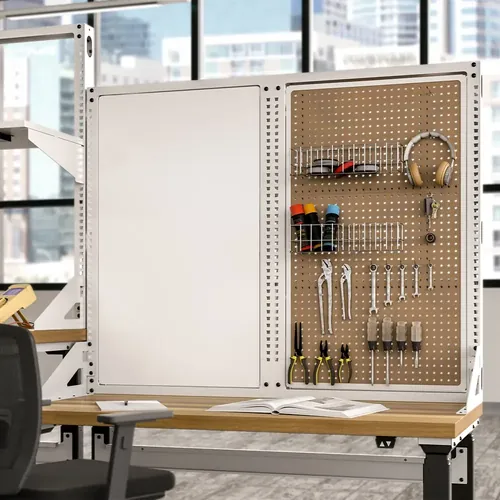
Electric Height Adjustable Workbench With Organizer Panel 60W x 30D
-
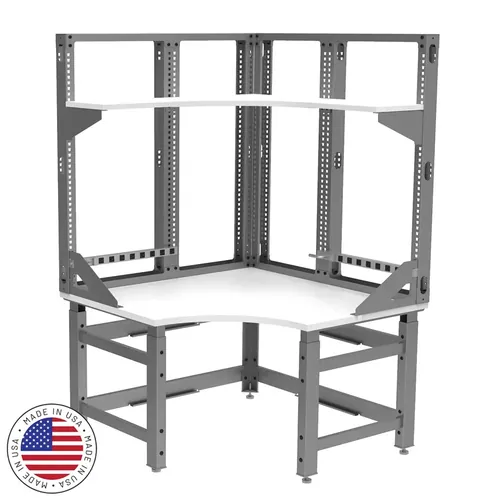
L Shaped Workbench 48W x 30D
-
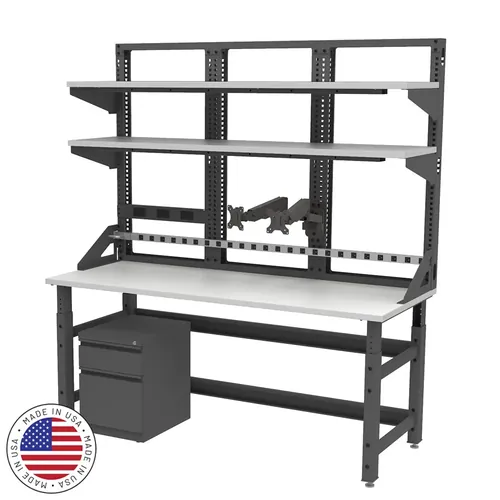
Space Saving Workbench With Elevated Shelving 72W x 30D
-
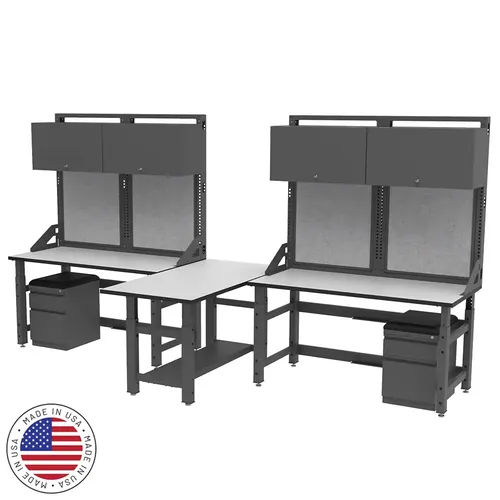
Workbench System Dual Station 150W x 60D
-
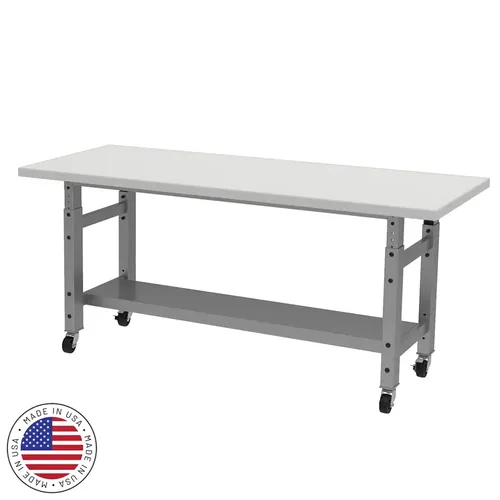
Portable Workbench 72W x 30D
-
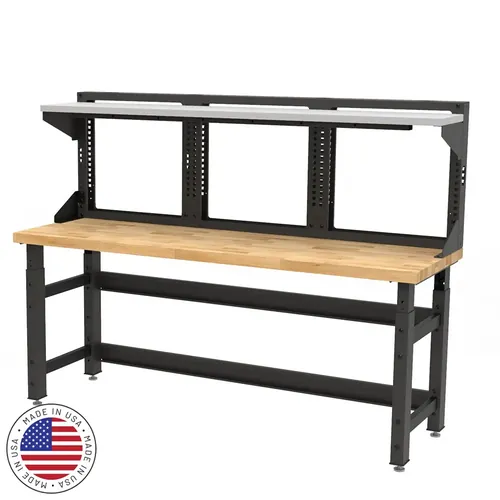
Adjustable Height Workbench Table With Fixed Shelf 72W x 24D
-
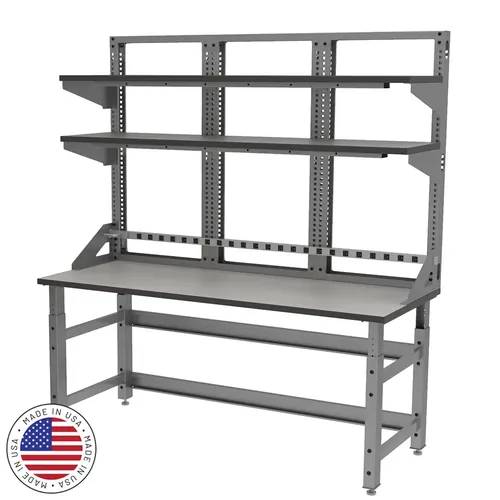
Heavy Duty Workbench With Double Upper Fixed Shelves 72W x 30D
-
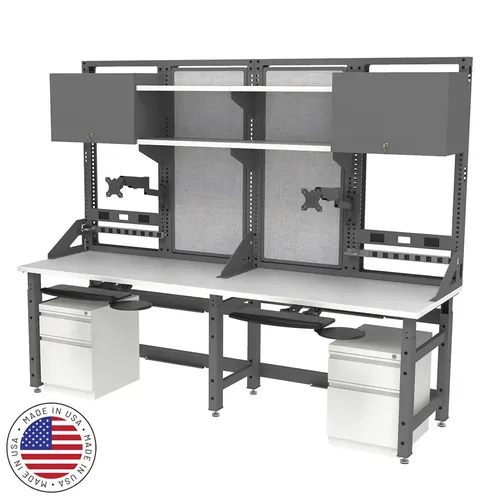
Two Person Workbench With Overhead Storage and Monitor Mounts 96W x 30D
INTRODUCTION
In any industrial or technical environment, having a well-designed and durable workspace is crucial for efficiency and productivity. Industrial workbenches are more than just tables, they are engineered solutions that provide stability, organization, and ergonomic benefits to support a wide range of tasks
From manufacturing floors to laboratories and assembly lines, a high-quality workbench enhances workflow, improves safety, and adapts to the specific needs of each industry. Whether for heavy-duty mechanical work, precision assembly, or technical repairs, these industrial workbenches offer the perfect balance of strength, customization, and functionality.
THE EVOLUTION OF WORKBENCHES
Industrial workbenches have been an essential part of workspaces for centuries, evolving from simple, functional surfaces to highly specialized, customizable workstations. Originally, these benches were just basic tables designed to hold tools and materials for tasks such as carpentry, metalworking, and assembly.

As industries grew and technology advanced, the need for more specialized workstations became apparent. In the 20th century, especially with the rise of manufacturing and electronics, workbenches began to incorporate features like adjustable heights, integrated storage solutions, and anti-static surfaces for precision work.
Today, industrial workbenches are not just functional surfaces but engineered solutions that enhance productivity, safety, and ergonomics across a wide range of sectors, from heavy-duty mechanical work to high-tech electronics assembly. With advancements in materials like steel and composite surfaces, workbenches now offer superior durability and flexibility, supporting a variety of tasks in diverse industries.
INDUSTRIES THAT BENEFIT FROM INDUSTRIAL WORKSTATIONS
Industrial workstations play a crucial role in various sectors, providing durable, organized, and ergonomic workspaces. Their versatility makes them essential for industries that require precision, heavy-duty support, and efficient workflow management.
Manufacturing & Assembly
In production lines and assembly facilities, industrial workstations provide a stable platform for assembling products, inspecting components, and conducting quality control checks. Their heavy-duty construction and customizable features help optimize efficiency and reduce workplace fatigue.
Electronics & Technology
Electronics manufacturing and repair require specialized stations with anti-static surfaces, integrated power outlets, and proper lighting. These features protect sensitive components from damage while ensuring technicians have a clean and efficient workspace for circuit board assembly, soldering, and testing.
Automotive & Mechanical Repair
Stations in automotive workshops and mechanical repair stations need to support heavy tools, engine components, and mechanical parts. Reinforced surfaces, built-in tool storage, and oil-resistant coatings make them ideal for mechanics and technicians handling complex repairs.
Woodworking & Carpentry
Precision and stability are essential in woodworking. Industrial tables designed for carpentry offer sturdy surfaces for cutting, sanding, and assembly furniture or structural elements. Integrated clamps, storage, and dust collection features enhance workflow safety.
Machinery Maintenance & Industrial Repairs
Factories, warehouses, and maintenance facilities rely on industrial setups for servicing and repairing heavy machinery. These stations provide ample space for dissembling parts, organizing tools, and conducting detailed maintenance tasks.
ESSENTIAL ACCESSORIES TO MAXIMIZE WORKBENCH PERFORMANCE
To optimize the functionality and efficiency of an industrial workbench, several accessories can be integrated to meet the specific demands of your workspace. These additions not only enhance the organization but also improve safety, comfort, and workflow.
Tool Organizers and Storage Solutions
The inclusion of tool racks, drawers, and shelves ensures that tools and equipment are easily accessible, reducing time spent searching for items. Organized storage solutions also help maintain a clutter-free workspace, promoting efficiency and safety.
Lighting Systems
Adequate lighting is crucial for tasks that require precision. Installing task lighting or overhead LED lights can reduce eye strain and improve visibility in dimly lit areas. Adjustable lighting options allow workers to customize their workspace according to their needs.
Anti-Static Mats
For industries like electronics manufacturing, anti-static mats are essential. These mats help prevent electrostatic discharge (ESD), protecting sensitive electronic components from damage. ESD mats are designed to dissipate static electricity safely, creating a secure environment for delicate assembly tasks.
Height Adjustment Mechanisms
Ergonomics plays a significant role in worker comfort and productivity. Height-adjustable workbenches help accommodate different tasks and promote a healthy posture, allowing workers to alternate between sitting and standing positions.
Power and data Access Points
Incorporating power strips, USB charging stations, and data ports into workbenches allows workers to easily access power for tools, equipment, and electronics. This ensures that devices are always ready for use without the hassle of tangled wires or insufficient outlets.