


U Shaped Desk
The U shaped desk offers a wraparound design that surrounds you on three sides. This configuration provides a generous amount of workspace for electronics, paperwork and elbow room, and can even host small meetings in the privacy of your own office.
Many people opt for a U shaped desk with hutch for the convenient overhead storage, or for a more “executive” appearance. Others prefer a simple U shaped office desk without the tall cabinets if the work is primarily digital with nothing to store, or to prevent blocking windows in the office.
We offer a wide array of commercial grade U-desks for a wide array of customers. We have “large and in charge” traditional desks, modest contemporary desks, and sleek modern desks. We have real wood veneer desks and high quality laminate desks. We have desks with bowfronts, straight fronts, P-tops and D-islands. We have desks in stock that can ship in less than a week and “sky is the limit” custom desks if you have time to wait. No clue where to begin? Call us today and speak with a furniture pro! Scroll down for some exciting stories about extreme desks.
U Shaped Desk With Hutch
-
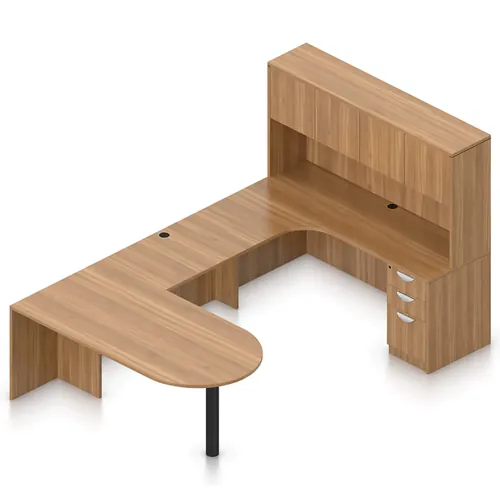
Attract Office Desk U Shape 71W x 114D Post Leg
-
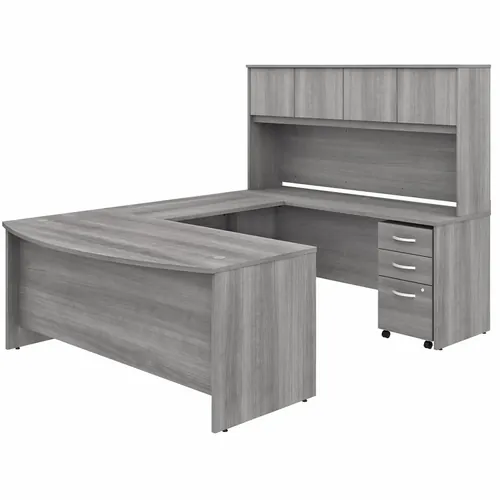
Besto Executive Office Desks 71W x 101D
-
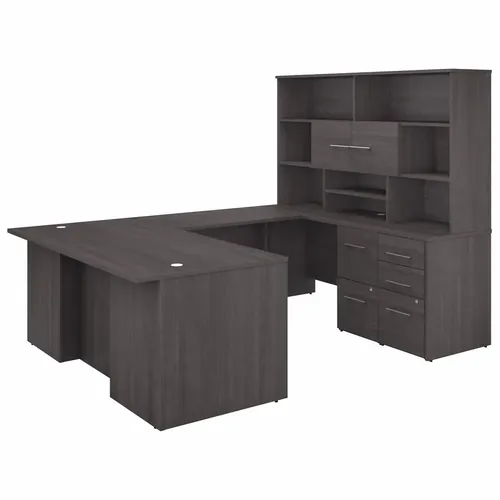
Premier Office Desk U Shape 71W x 100D
-
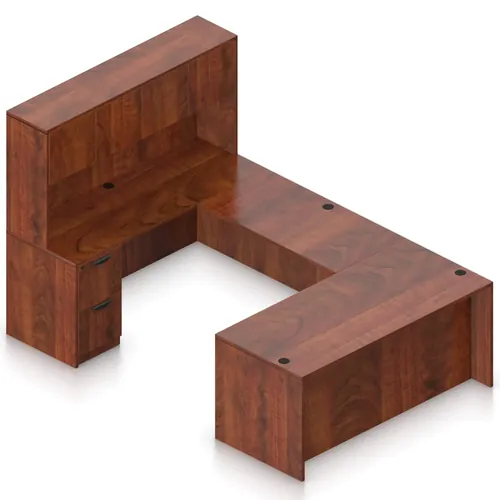
Attract Office Desk U Shape 71W x 108D
-
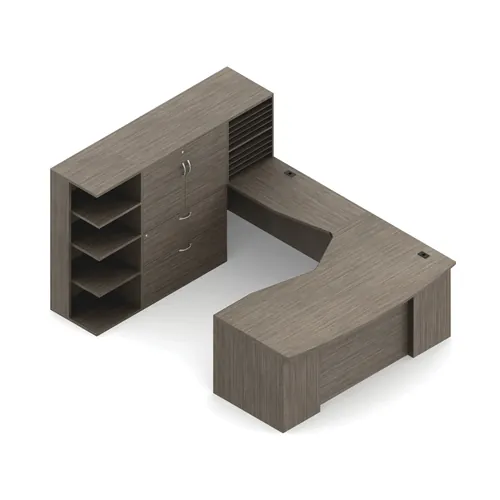
Geneva Contemporary Office Desk 72W x 102D
-
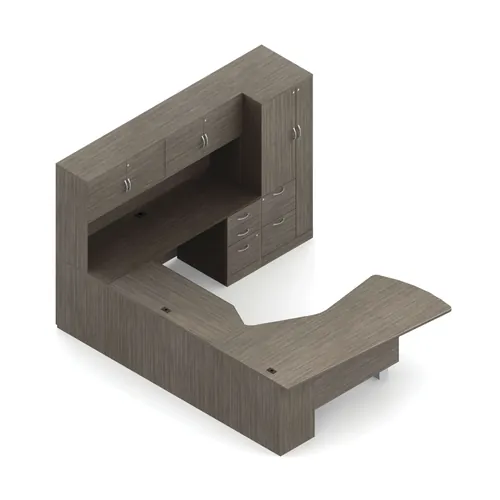
Geneva Corner Office Desks 68W x 114D
-
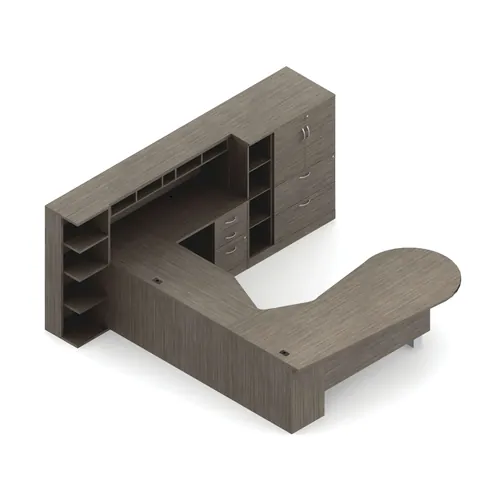
Geneva U Shaped Desks 72W x 108D
-
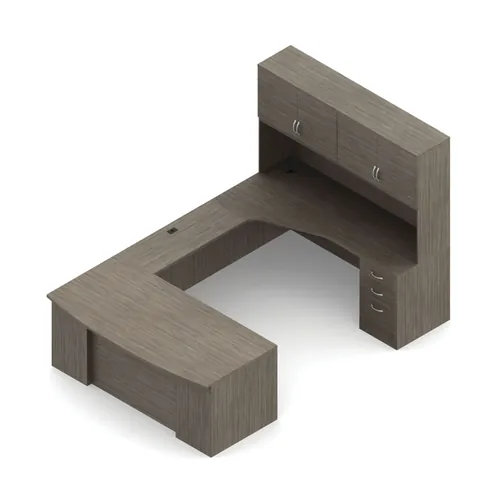
Geneva Executive Office Desks 72W x 114D
-
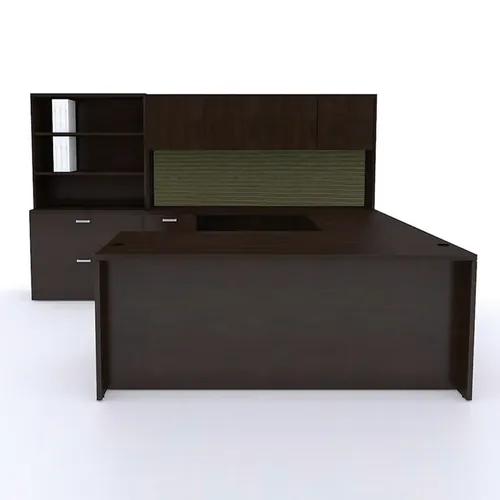
Brea Executive Office Desk 108W x 108D
-
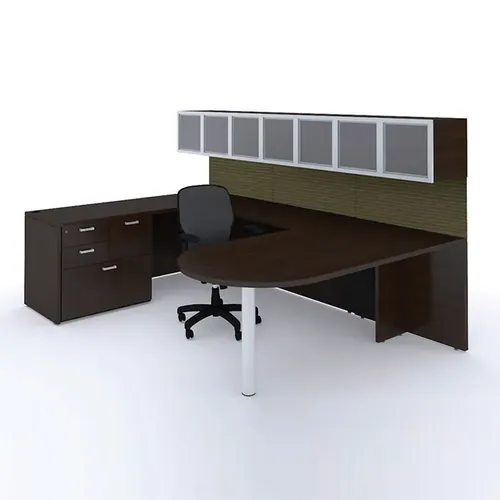
Brea Affordable Desk 94W x 72D
-
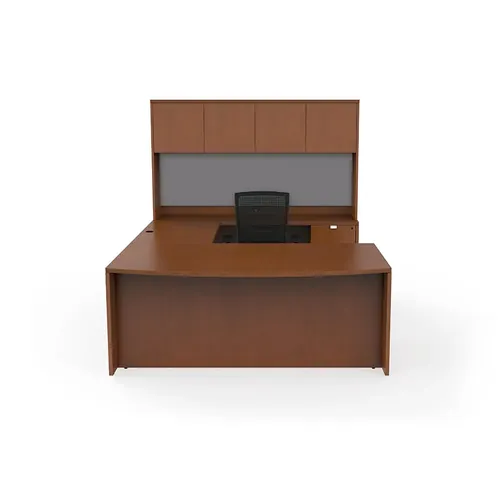
Verona Veneer Solid Wood Office Furniture 72W x 104D
-
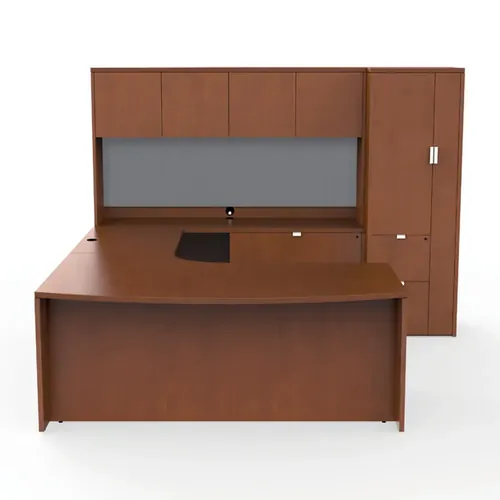
Verona Veneer Executive Office Desks Right 96W x 98D
-
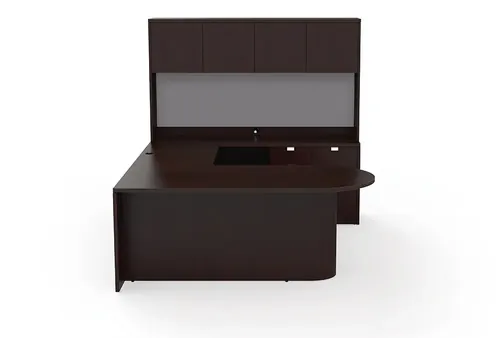
Verona Veneer Wood Office Furniture 72W x 104D
-
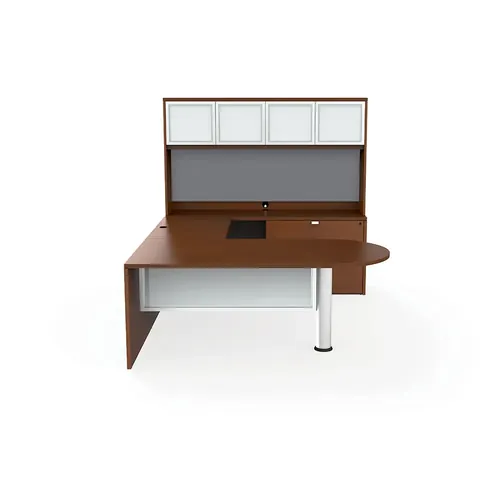
Verona Veneers Wooden Office Furniture 72W x 104D
-
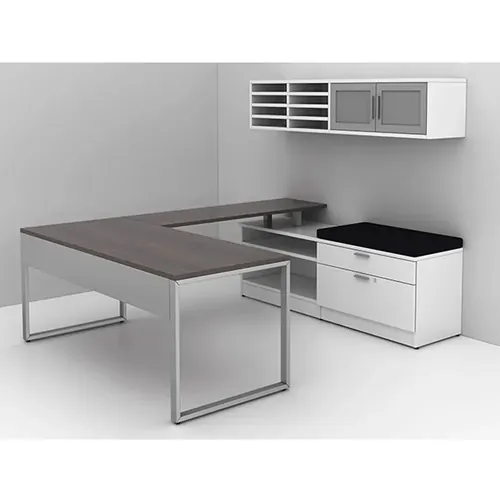
Ezra White Executive Desk 72W x 90D
-
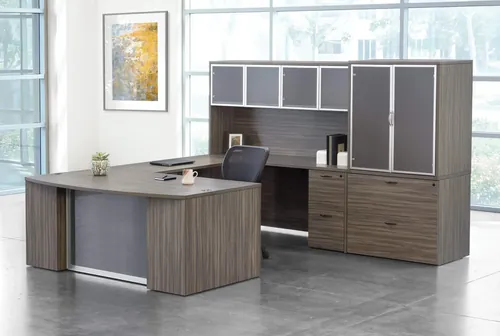
Modern U Shaped Executive Desk Novato 107W x 112D
-
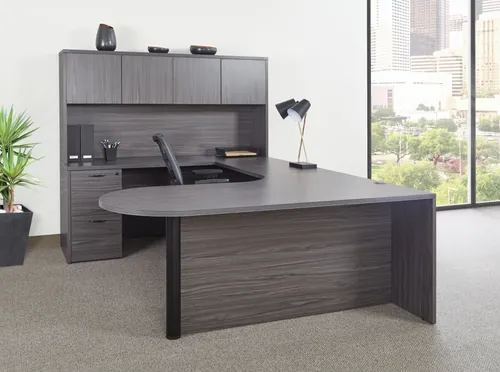
Modern U Shaped Desk with Hutch Novato 71W x 101D
-
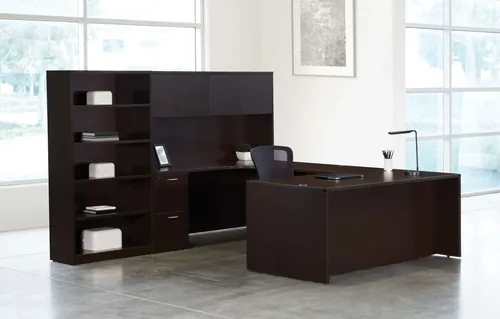
Contemporary U Shaped Office Desk Novato 107W x 107D
-
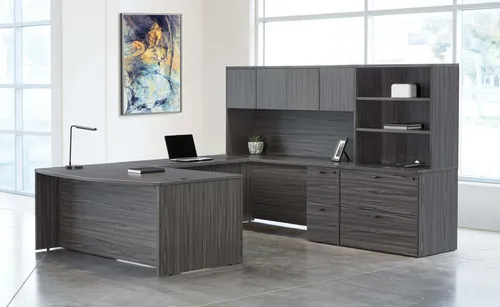
Contemporary U Shaped Desk Novato 107W x 112D
-
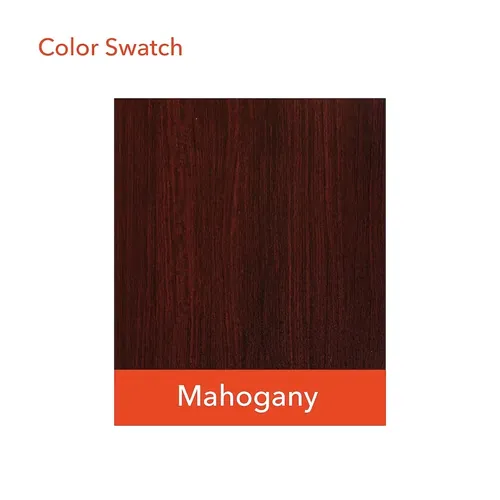
Modern U Shaped Office Desk Novato 71W x 112D
U Shaped Office Desk
-
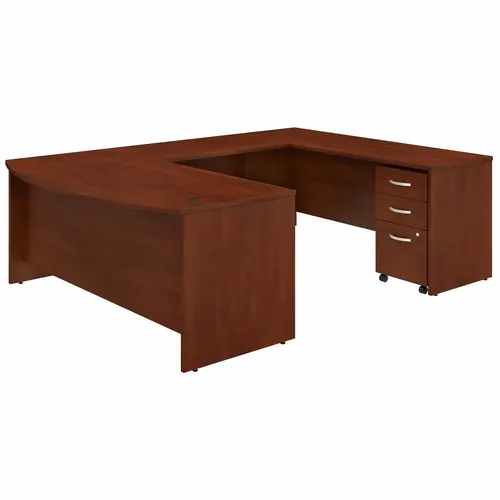
Besto Office Desk U Shape 71W x 101D
-
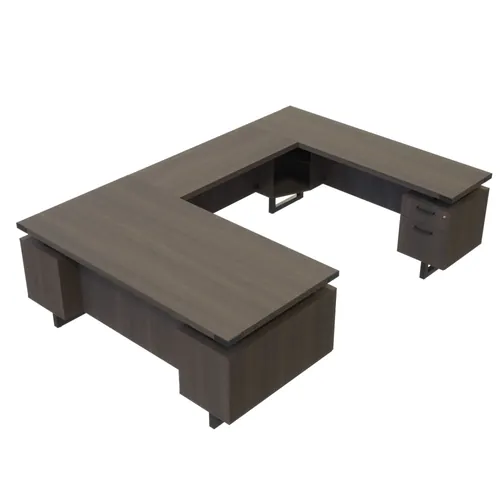
HO4 Modern Office Desk 72W x 98D
-
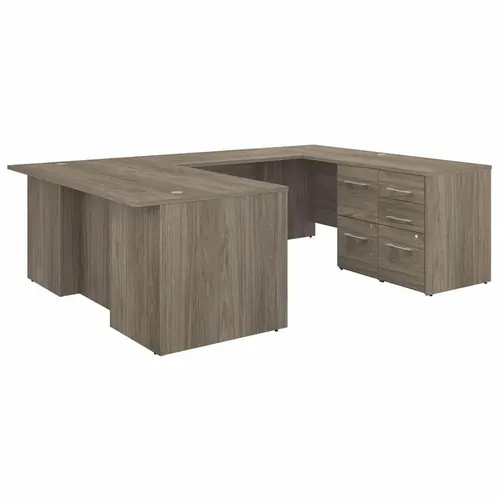
Premier U Office Desk 71W x 100D
-
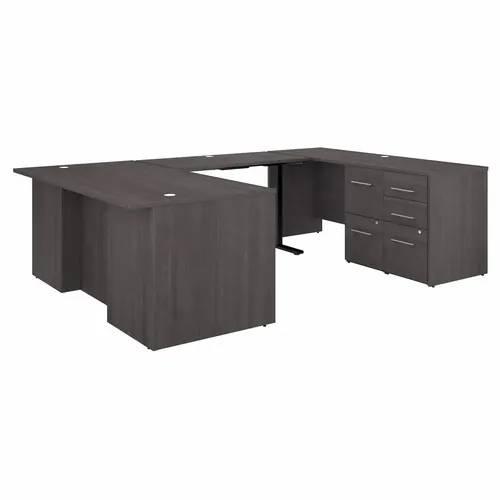
Premier Office Desk U Shape 71W x 108D Sit Stand
-
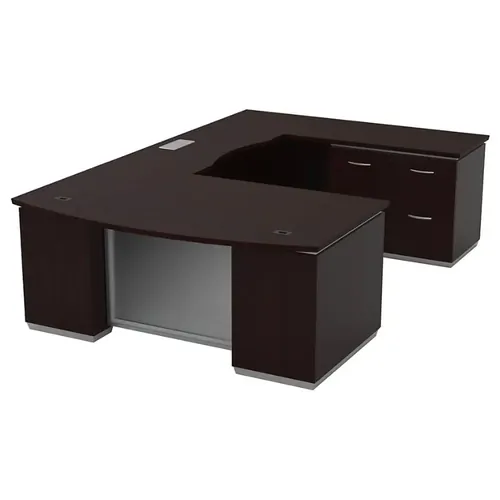
Black Tie U Shaped Executive Desk Four Pedestal
-
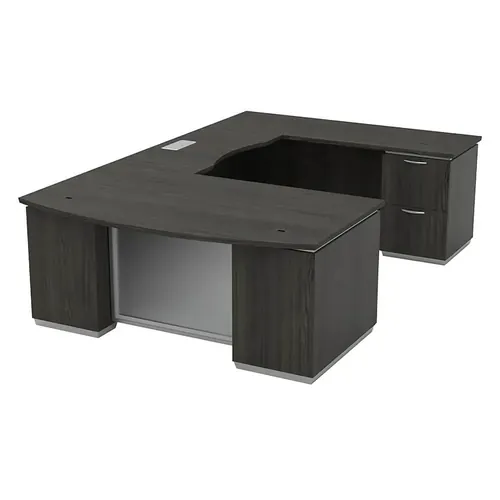
Black Tie U Shaped Executive Desk 72W x 114D
-
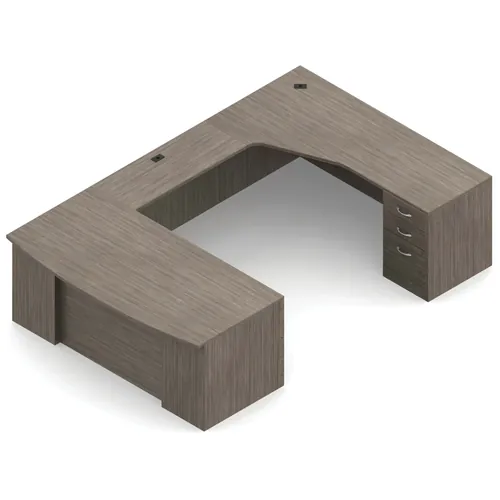
Geneva Cherry Wood Desk 72W x 114D
-
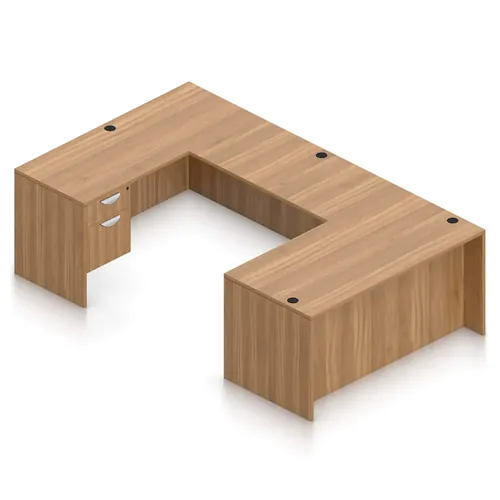
Attract U Office Desk 60W x 96D
Desk furniture is basically all the same. You pick a size and shape, add some desk drawers and shelves, select your finishes and that’s it, end of story. If you’ve seen one office desk setup, you’ve seen them all… right? Not necessarily. Behind every desk there is a desk maker. Some of those desk makers have a desire to produce something great that the world will remember. A few of them will achieve that goal, and their stories are intriguing. We present to you, some of the Most Extreme Desks in the World.
The Largest Desk in the World
The average office size is around 12’x15’ or 180 square feet. This will comfortably fit a modest sized U shaped computer desk, a small meeting table and chairs, and maybe a couch or a few bookcases. If you knocked down those office walls and multiplied the space 127 times, you’d have just enough room to accommodate the largest desk in the world.
Meet The Superdesk. This behemoth stretches 1,100 linear feet and runs fluidly through a 23,000 square foot open office space with twists, turns, curves and undulations. It belongs to marketing firm The Barbarian Group in NYC, where 125 employees work together at their one shared desk. Total cost? $300,000. That may sound jaw-droppingly expensive, but with room for up to 170 people it’s considerably less per employee than your typical office furniture budget.
From design to final delivery in 2014, the entire process took 8 years. The giant desk was designed by Clive Wilkinson Architects and manufactured by Machineous, a custom fabricator in LA. They used low cost materials like plywood, MDF and plate steel, and programmed vintage industrial robots to cut the panels. Then they flat packed over 500 individual pieces, shipped them to the Flatiron District in NYC and assembled them on site. Armed with clear diagrams and numbered pieces, everything fit together like a jigsaw puzzle, much like the modular blocks we use for our Drywall Alternatives.
Once assembled they finished the big desk with a sparkly white polymer surface created from one long, slow, continuous pour of resin that lasted 24 hours in order to produce a seamless, unbroken surface. The desk fosters creativity & imagination with open work spaces, archways & tunnels, bookshelves, communal areas for meetings and social interactions, and little nooks and crannies tucked away for private focused workspace.

U shaped office furniture on a whole new level
|

Plenty of shared workspace
|

Over 500 modular desk components
|

A truly modern open office plan
|
This extra long desk was born from the understanding that working in a digital era, all you really need is the WiFi password and a flat place to set your laptop. In creative industries like marketing, work often gets done by moving around and interacting, not by staying isolated at the same spot day in and day out. This is the same reasoning behind hot desking.
Naturally, The Superdesk gathered a great deal of media attention and earned an Award for Interior Architecture in 2015 from the American Institute of Architects.

The Superdesk: Office desk layout
|
The Most Expensive Desk in the World
For a very long time this honor went to the high end custom furniture designer Parnian for a luxury desk costing $200,000. This beauty was constructed from 6 different types of exotic woods (including Ebony and Carpathian Elm) and a custom cast piece of glass. It took 5 months to design and build, and currently sits in their showroom in North Scottsdale, AZ.

Parnian custom wrap around desk
|
However, in 2011 they were upstaged in England by Luzzo Bespoke for their $240,000 desk inspired by Bugatti racecars of the late 1920’s and early 1930’s. The awe-inspiring amount of features and details in this creation begs the question: is this a modern office desk or a modern work of art?
First, there is the Form. The body of the metal desk is painted with “French Racing Blue” lacquer, the most iconic Bugatti paint color of the time. A tan leather writing pad is reminiscent of the car’s interior upholstery, and the polished aluminum frame brings to mind the Bugatti’s crankcase, oil sump, intake manifold and wheels. Additional classic desk design details include the distinctive honeycomb grill, finned sumps, knurled radiator cap, and unique body bolts.
Then, there is the Function. A sit and stand height adjustment operates by turning the “starter crank”. Hidden beneath the desk surface is an Apple desktop computer that rises up with the touch of a button and quietly retracts when no longer needed. The drive gears are powered by a rack and pinion system modeled after a Bugatti Type 57 Winfield carburetor. The level of detail is beyond impressive.
 |
 |

The Bugatti Type 37. Who knew it would one day become an office desk inspiration?
|
The entire process for this unique desk involved over 2,000 design hours, 1,500 production hours, and 350 individual components. Luzzo Bespoke made a limited edition of only 10 desks and each one comes with a numbered serial plate and log book. If you’re a car fanatic, you’ll probably understand and appreciate reading the full story.
But these cool desks are only the most expensive in terms of actual cost and retail worth. They pale in comparison when it comes to the perceived value of a simple, elegant wooden desk with a priceless history. Behold, the Tufft Writing Table:

Small desk table. Big money.
|
This piece was hand carved by Thomas Tufft around 1775-1776 for Richard Edwards, a rich general store owner in New Jersey. It features a Chinese-style apron of pierced fretwork, tall curved legs, and detailed ball-and-claw feet. It became a classic and relevant example of Philadelphia Rococo furniture, a favorite among big spenders and collectors.
The small writing desk was passed down through the original patron’s family until January 1990, when descendant Samuel Harrison Gardiner (a Philadelphia architect) put it up for auction at Christie’s and Sotheby’s in New York. At the final strike of the gavel, it sold for a whopping $4.6 million to NY dealer Harold Sack of Israel Sack; that single moment made it the most expensive table in the world. And Gardiner got to settle into a pretty sweet retirement.
The Oldest Desk in the World
Sadly, there is no preserved relic of the very first work desk in the world hiding out in a museum somewhere. But we still have to wonder, when did someone first sit down at a flat surface and use it for the purposes of reading, writing, learning, and working? Well, the word “desk” is from the mid-14th century Modern Latin word desca, or “table to write on”. But the function had been happening long before anyone found the right word for it, as soon as civilizations began wanting to sit down to read or write, rather than standing in front of a cave wall.

First there was fire. Then there were business desks.
|
Based on what we know about furniture in the ages of Ancient Egypt, Greece, and Rome, it seems the primary focus was on beds, couches, chairs and stools. There were great politics involved in where and how people were allowed to sit, and it clearly indicated status. Much like today, when the big boss gets the swanky Ergohuman Chair and the office clerks get the sensible task chairs.
There is some evidence of tables, but they were mainly used for meeting, eating, or storing items. These cultures created a prolific amount of artistic works and writings, but it is assumed that most of it was done on easels while standing, or on low tables while sitting on the floor or small stools. The first recognizable desks began to appear in medieval illustrations. Monastic institutions emerged in the early 6th century, with the first European monastic writing dated around 517.

Early drafting table desks first used by monks.
|
Most monasteries had a scriptorium, a desk filled room dedicated to writing, copying, and illuminating religious manuscripts. The large wooden desks were generally very heavy, angled structures (much like a modern drafting table), in order to accommodate the large and heavy manuscript volumes of the time. Most of them were designed with slots and hooks for bookmarks and writing implements.

Sometimes the most inexpensive desks can produce the most valuable works.
|
Beginning in the 13th century, secular and private workshops started popping up with similar simple desks, where professional scribes copied texts to fulfill orders from patrons. With the arrival of a new invention called the printing press in the mid-15th century, scribes had to find new work and desk designs started slimming down. As both wealth and literacy began to grow throughout Europe, the table desk started finding its way into private homes. Writing chests or writing boxes were also very popular, which were cabinets with a hinged lid that folded down to become a flat writing surface.
As woodworking and cabinet-making grew into a distinct trade, desks started becoming more interesting. They developed drawers and compartments. Their appearance was less utilitarian and more attractive and decorative, with interesting carvings and embellishments. They were most often created from prevalent woods like oak or walnut and then painted or gilded. A very defining feature of Renaissance desks was a three sectioned drawer that held the ink pot, the blotter, and the powder tray.

16th century Italian desk
|

17th century English desk
|

17th century French Bureau Mazarin
|

17th century Austrian desk
|

16th century Spanish Vargueño
|

17th century Welsh writing box
|
During the 18th and 19th centuries, designs started to evolve into the office desk furniture we know and use today.
The Fastest Desk in the World??
Yes, you read that right. In November 2006, Edd China from London earned the Guinness World Record for “World’s Fastest Office” as he drove across the Westminster Bridge sitting at his U shaped executive desk going 87mph. This puts a whole new spin on having a Desk on Wheels!
For fellow motorheads, grease junkies, and car aficionados, you’ll likely recognize that name from the show Wheeler Dealers on the Discovery Channel, in which master mechanic Edd performed auto magic on “fixer uppers” in the UK and resold them for a pretty price.
So how did China build his mobile office? He started by powering it with an engine from a Rover 100. Then he added ignition controls in his briefcase, a computer keyboard for a steering wheel, a computer mouse equipped with a horn, and a cup with pens that function as turn signals. But this is not just a decoration, no. He made sure this contraption was a fully functional large office desk, complete with working computer, water cooler, and a meeting table with three additional chairs for colleagues to hitch a ride (with safety belts, of course). The total cost? $85,700.
China is no stranger to breaking Guinness Records with speed and innovation; he’s also on their books for the fastest mobile bed (69mph), fastest toilet (42.25mph), fastest garden shed (58.41mph), and fastest furniture (a sofa that went 92mph – a record later broken by Perry Watkins and his 113mph dining table). It’s also noteworthy to mention that all of these speedy creations are completely street-legal and insured, although that doesn’t prevent him from frequently getting pulled over for questioning.
The Most Famous Desk in the World
While it may not be an official title, there is one executive office desk that garners so much esteem and intrigue, it can arguably be considered the most famous. People travel near and far to tour its location and hope for a photo opp. There are replicas in museums and institutions nationwide. It’s been used by multiple famous and powerful owners. It’s been in the movies. It is The Resolute Desk. It’s iconic. And it all started with a ship lost at sea.
The HMS Resolute made its last seaworthy voyage in 1852, heading for the Northwest Passage in search of a missing expedition. She became trapped in ice and abandoned by her crew. She eventually broke free from the ice and traveled adrift, unmanned, for three years and over 1200 miles. An American whaling ship recovered the Resolute in 1855, and the US Congress paid for the ship to be rescued, brought to the Brooklyn Navy Yard to be fixed up, and sent to Queen Victoria as a gift of friendship during a particularly tense time for British and US relations.
Once the ship was decommissioned, the Queen had master carpenter William Evenden use the white oak and mahogany wood from the ship to construct the highly detailed, ornate desk as a requited gift of that friendship. England presented it to the 19th U.S. President Rutherford B. Hayes in 1880. Some of the original concept office desk plans included side panels with portraits of Victoria and Hayes, the British and U.S. flags, and a backdrop of arctic scenes. There’s actually a great deal more to this story, but we really need to get back to talking about the pedestal desk.

One of the original concept designs for The Resolute Desk
|
The style is considered a partners desk, otherwise known as a double desk. They don’t make them like this anymore, so it’s considered an antique design. It’s essentially an extra deep desk 4-feet across, designed for two people to work while facing each other, one on each side. They were very popular in the 19th century with banks and libraries.
The “office desk for two” has seen only two modifications throughout the decades. President Roosevelt requested a hinged panel on the outside of the desk in order to hide his leg braces (unfortunately he died before it was installed in 1945). The panel was embellished with a carving of the presidential seal, which quickly became an outdated design. Shortly after the desk’s modification, President Truman updated the official seal to turn the eagle’s head towards the talon holding the olive branch instead of the arrows, to signify the nation’s dedication to peace.
Then in the early 1960’s, six-foot tall President Kennedy first brought it into the Oval Office and ordered a 2” plinth be placed underneath the desk to raise it up higher and better accommodate his stature. After Kennedy was assassinated, the base was removed and the Oval Office Desk left the White House for 14 years to be exhibited at the Kennedy Presidential Library and the Smithsonian Institution.
After returning home, the desk was again placed on a new base at the request of 6’1” President Reagan in the 1980’s. It has remained part of the desk ever since, well appreciated by the next five presidents, all 6-foot or taller. You can bet these towering figures could use a good Big and Tall office chair!

The One,The Only... The President’s Desk
|
You can purchase your very own reproduction if you happen to have $8,545.00 to spare (plus $800 white glove delivery service!). If you don’t, we are happy to sell you a number of more affordable desks right from this page.
And there you have it. The biggest, brightest, boldest stars in desk furniture history. May they inspire you to dream big and achieve great things the next time you sit down at your own office computer desk to start your day.