


O2™ NOW Office Benching
O2 NOW™ office benching desks are a great choice if your office space layout design supports an open plan office.
If you feel your business model would thrive in a wide-open office environment where audio & visual info can spread freely across the office floor with no obstructions, if you want to maximize your office space plan to fit as many co-workers as possible, then bench desks may be right for you!
Our commercial quality, modern office benching system is built to endure 24/7 work environments, configured to fit minimal square footage, and priced to impress the CFO.
We offer our “Uncubicle” desking system here in the most common configurations, with the most popular options.
As you scroll through our open office furniture system listings, you have easy “this or that” choices:
- Integrated electrical power: Yes or No?
- Workstation wall heights: No privacy 39”H, or moderate privacy 53”H
- Desk configuration: Workers all facing one way (inline), or facing each other (clustered)?
- Multi person desk: Seating for 2, 3, 4 or 6?
Benching Systems 39H Powered Panels
-
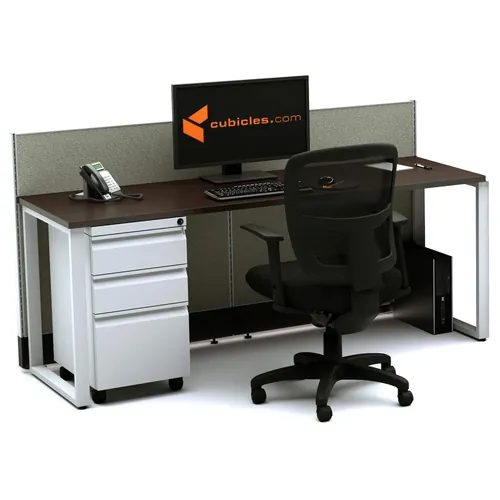
Open Office Workstations 39H Single Powered
-
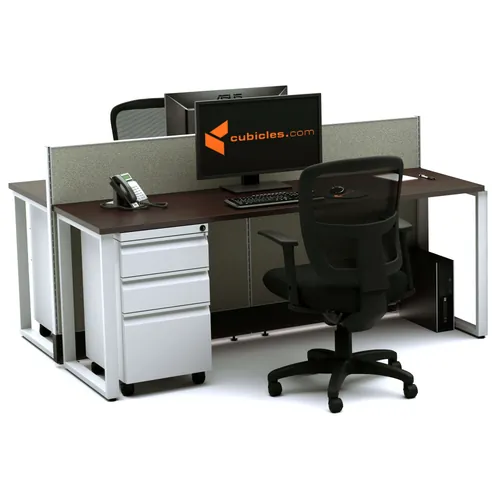
Open Office Workstations 39H 2pack Cluster Powered
-
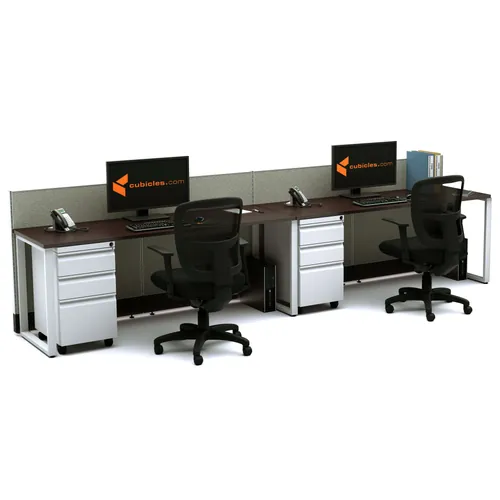
Open Office Workstations 39H 2pack Inline Powered
-
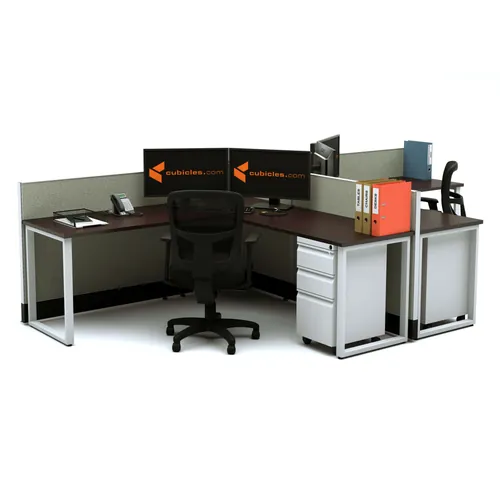
Open Office Workstations 39H 2pack T Cluster Powered
-
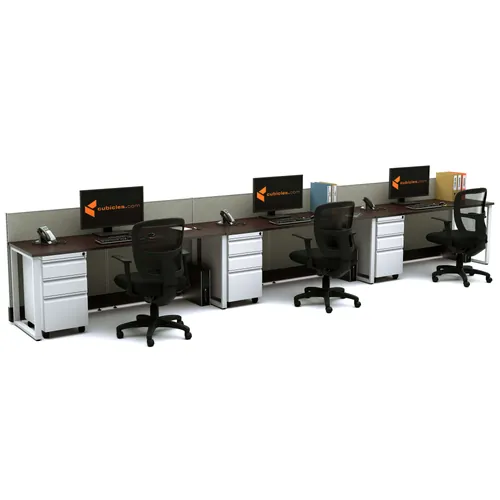
Open Office Workstations 39H 3pack Inline Powered
-
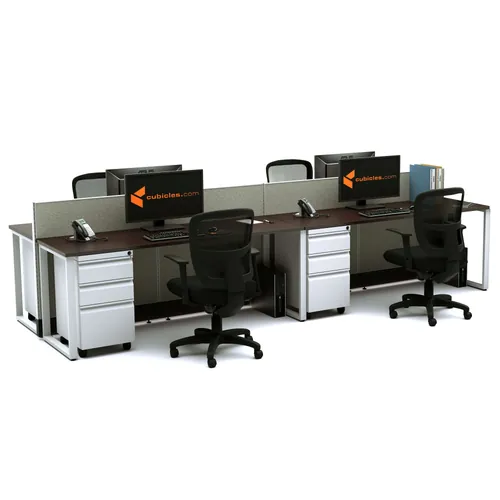
Open Office Workstations 39H 4pack Cluster Powered
-
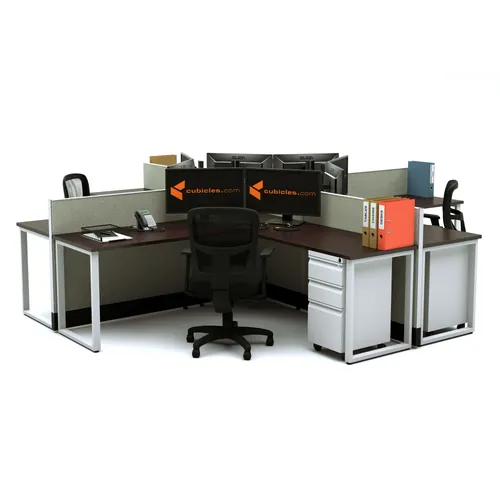
Open Office Workstations 39H 4pack X Cluster Powered
-
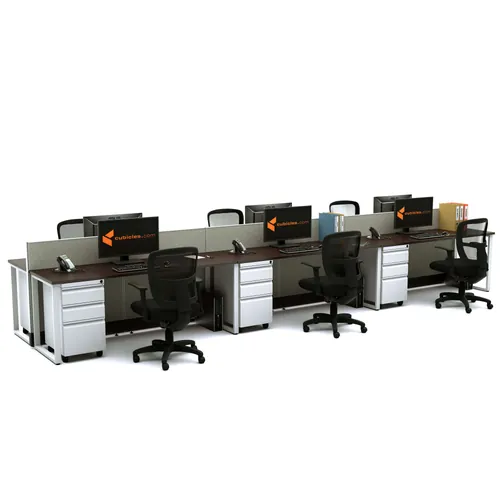
Open Office Workstations 39H 6pack Cluster Powered
-
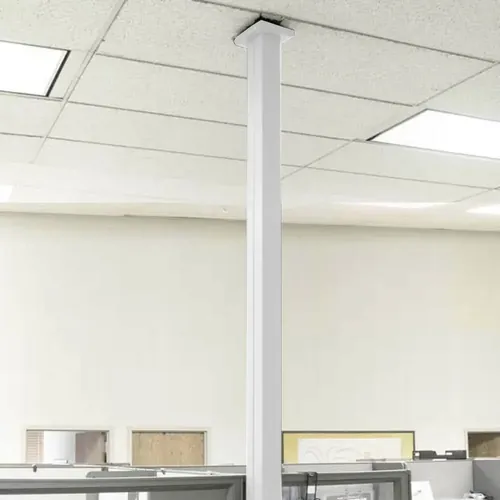
Commercial System Furniture Power Infeed
Benching Stations 53H Powered Panels
-
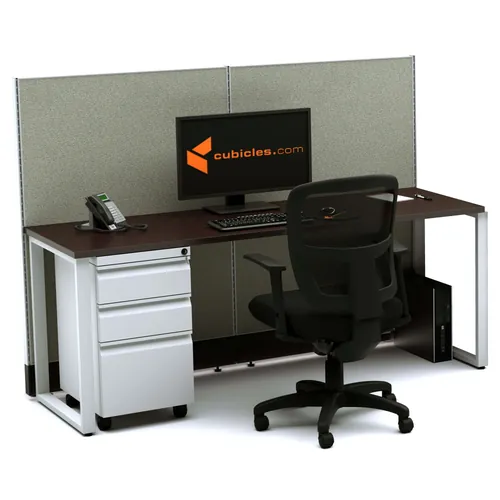
Open Plan Workstations 53H Single Powered
-
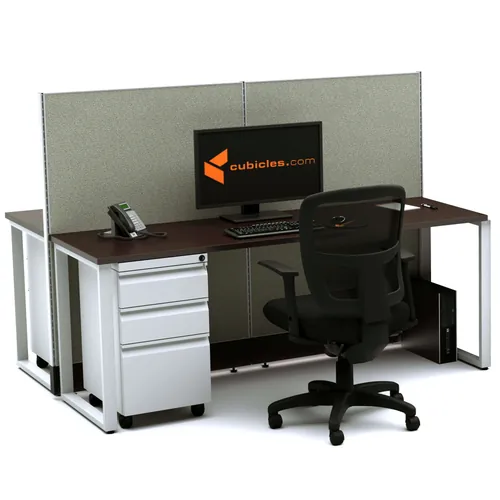
Open Plan Workstations 53H 2pack Cluster Powered
-
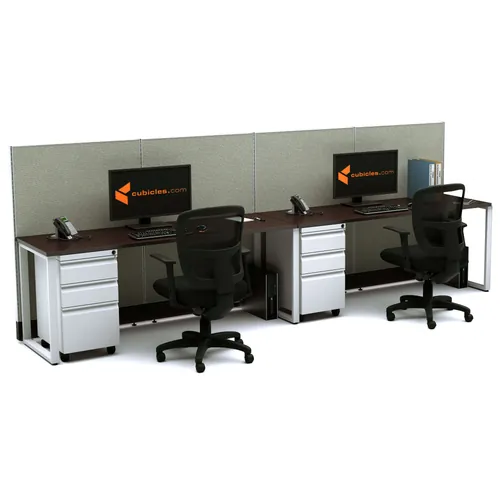
Open Plan Workstations 53H 2pack Inline Powered
-
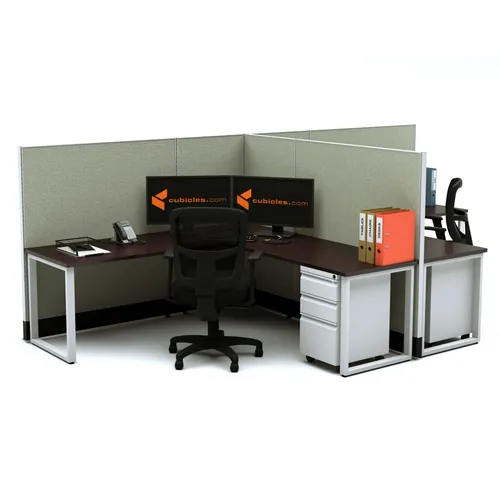
Open Plan Workstations 53H 2pack T Cluster Powered
-
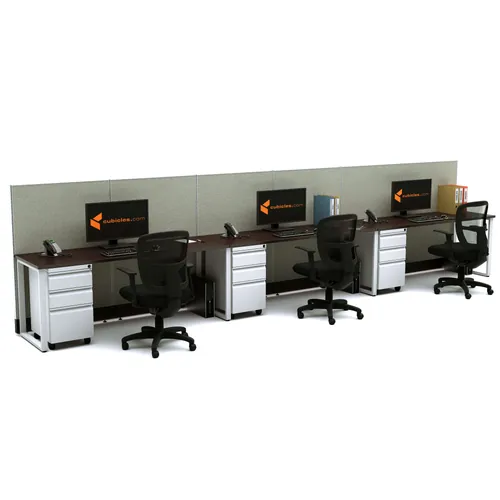
Open Plan Workstations 53H 3pack Inline Powered
-
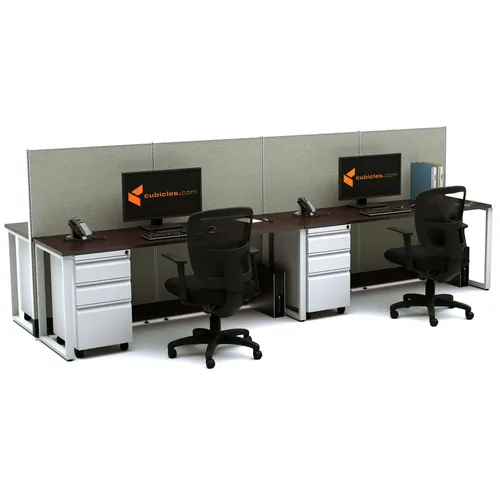
Open Plan Workstations 53H 4pack Cluster Powered
-
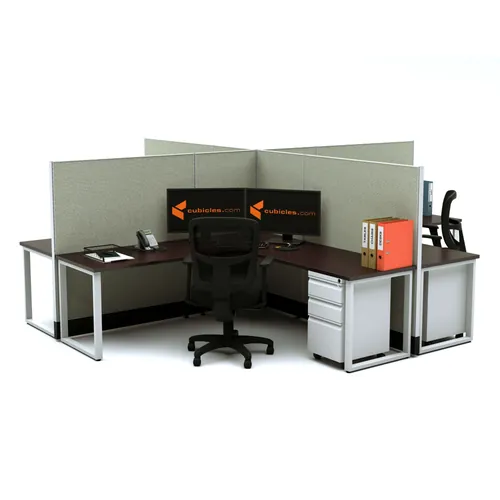
Open Plan Workstations 53H 4pack X Cluster Powered
-
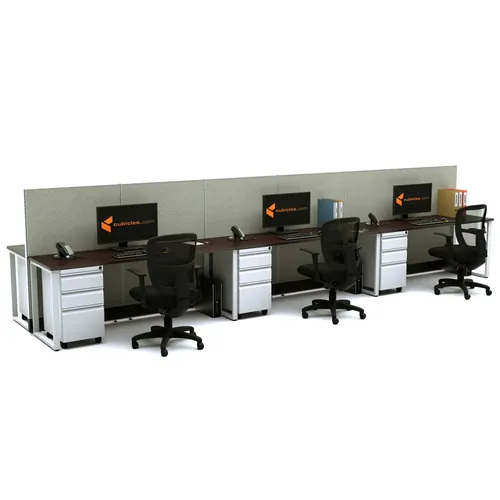
Open Plan Workstations 53H 6pack Cluster Powered
Benching Workstations 53H Powered Panels with Glass
-
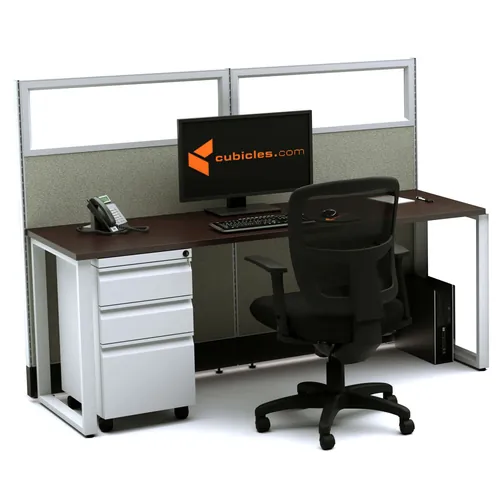
Open Office Desks 53H Single Glass Powered
-
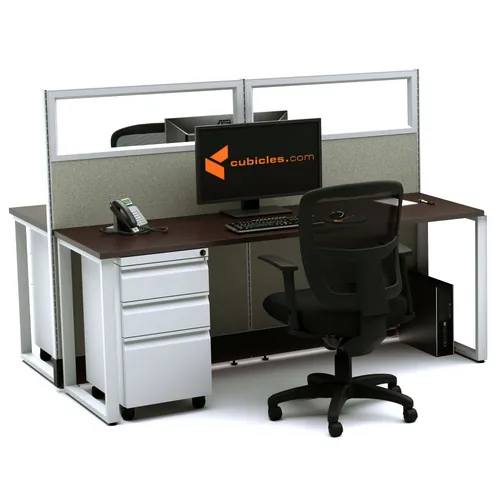
Open Office Desks 53H 2pack Glass Cluster Powered
-
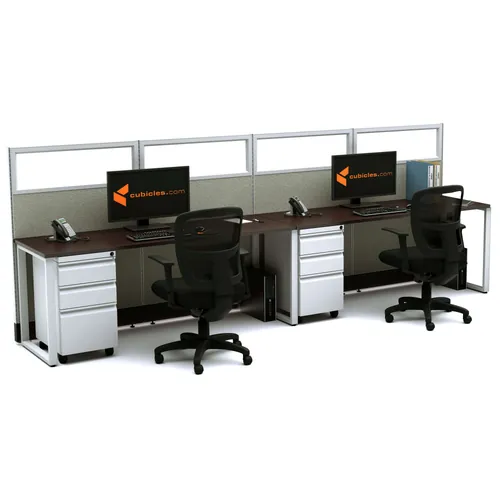
Open Office Desks 53H 2pack Glass Inline Powered
-
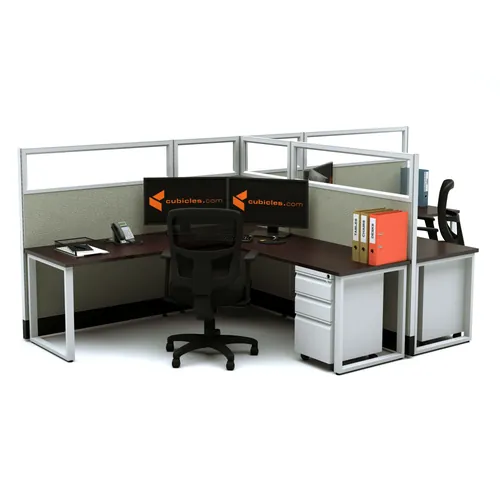
Open Office Desks 53H 2pack T Cluster Glass Powered
-
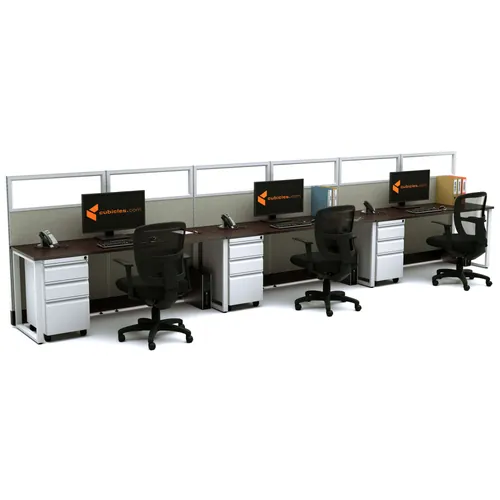
Open Office Desks 53H 3pack Glass Inline Powered
-
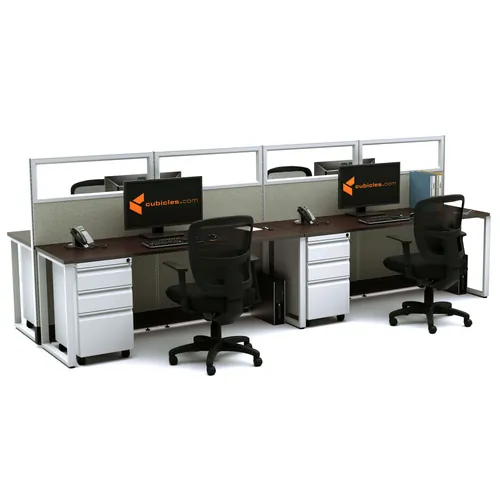
Open Office Desks 53H 4pack Glass Cluster Powered
-
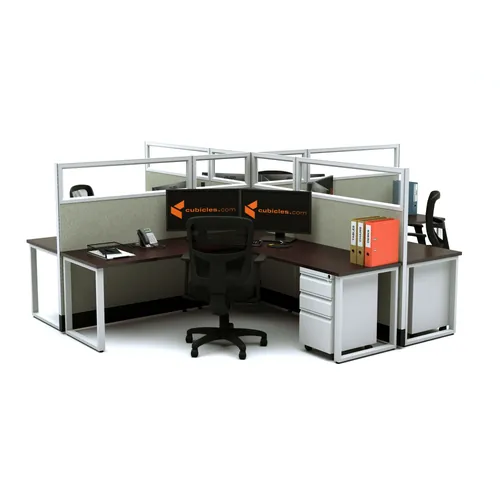
Open Office Desks 53H 4pack X Cluster Glass Powered
-
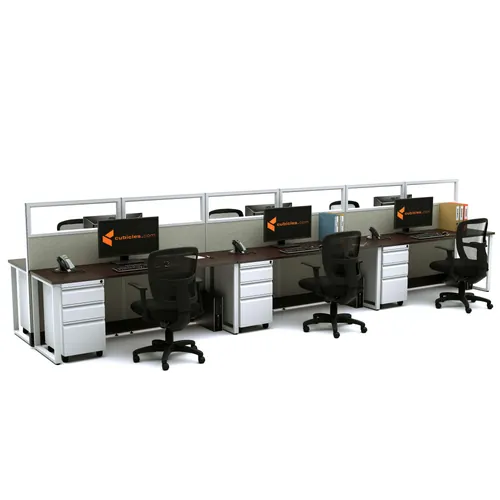
Open Office Desks 53H 6pack Glass Cluster Powered
Benching System 39H Non-Powered Panels
-
Open Office Workstation 39H Single Unpowered
-
Open Office Workstation 39H 2pack Cluster Unpowered
-
Open Office Workstation 39H 2pack Inline Unpowered
-
Open Office Workstation 39H 2pack T Cluster Unpowered
-
Open Office Workstation 39H 3pack Inline Unpowered
-
Open Office Workstation 39H 4pack Cluster Unpowered
-
Open Office Workstation 39H 4pack X Cluster Unpowered
-
Open Office Workstation 39H 6pack Cluster Unpowered
Benching Station 53H Non-Powered Panels
-
Open Plan Workstation 53H Single Unpowered
-
Open Plan Workstation 53H 2pack Cluster Unpowered
-
Open Plan Workstation 53H 2pack Inline Unpowered
-
Open Plan Workstation 53H 2pack T Cluster Unpowered
-
Open Plan Workstation 53H 3pack Inline Unpowered
-
Open Plan Workstation 53H 4pack Cluster Unpowered
-
Open Plan Workstation 53H 4pack X Cluster Unpowered
-
Open Plan Workstation 53H 6pack Cluster Unpowered
Benching Workstation 53H Non-Powered Panels with Glass
-
Open Office Desk 53H Single Glass Unpowered
-
Open Office Desk 53H 2pack Glass Cluster Unpowered
-
Open Office Desk 53H 2pack Glass Inline Unpowered
-
Open Office Desk 53H 2pack T Cluster Glass Unpowered
-
Open Office Desk 53H 3pack Glass Inline Unpowered
-
Open Office Desk 53H 4pack Glass Cluster Unpowered
-
Open Office Desk 53H 4pack X Cluster Glass Unpowered
-
Open Office Desk 53H 6pack Glass Cluster Unpowered
WHAT IS BENCHING AND HOW DID IT BEGIN?

Back in the early 21st century if you googled “office benching” you would likely be directed to web sites offering park benches for office complexes. A search for “bench desks” would yield pages for rugged work benches for a shop or garage.
Office design evolution has produced something far more polished and professional, a special type of collaborative desks that complement an open concept office design. They can range from a simple desktop and legs to a multifunctional desk design with integrated tech, tools, and storage. The key element is in the arrangement: desks are grouped to form work hubs for interaction & collaboration.
The First Workbenches
As far as we know there are no preserved relics of the world’s very first workspace tables on display (but the portable mini desk Jefferson used to write the Declaration of Independence is at the Smithsonian!). When did someone first sit down at a flat surface and use it for the purposes of reading, writing, learning, and working?
The word “desk” is from the mid-14th century Modern Latin word desca, or “table to write on”. But the function had been going on long before anyone found the right word for it, as soon as civilizations began wanting to sit down to read or write, rather than standing in front of a cave wall.

First there was fire. Then there were business desks.
One modern era workbench was designed by Andre Jacob Roubo, an 18th century French carpenter and cabinet maker. Roubo was a prolific master of masters, and his workbench for woodworking was the product of simple genius. His designs fully integrated all necessary woodworking tools right into the table.

Workstation Benching Applications Through the Ages… and the Industries
Wikipedia lists workbenches designed for industrial use, laboratory testing, jewelry making, electronics, metal and woodworking, software, gardening, the list goes on and on. They’re constructed with different materials and have different features and tools, but almost all of them are rectangular in shape.
Workbench desks are all designed to be extremely specific to the work at hand, and to help facilitate productivity and efficiency. Their timelessness lies in the fact that they’re not just work surfaces that hold your tools, they’re engineered to function as tools themselves.
|
|
|
|
|
Mechanics Bench |
Jewelers Bench |
|
|
|
|
|
|
Gardener’s potting bench |
||
|
|
||
|
Office Workbench |
||


As you might notice from the images, the bench desks designed for the open office floor plan stand apart from all the rest for one key detail: the communal grouping. A mechanic can be very territorial over their garage space. A jeweler needs solitude to focus on precision. A gardener usually spends their sunny day flying solo.
But for open office architecture, the concept of the workbench has been adapted for a collaborative work environment by creating a gathering of team desks where everyone can come face to face and work together towards common business goals and objectives.
You might wonder: why not just sit them all at a large conference table to work together? A fair point. But separate workspace desks have important nuances that make them a much better solution for teamwork. Features like integrated technology, separate storage space, and the sense of ownership that comes with having defined personal space all contribute to the success of benching desk systems furniture.
Office Benching in Modern Office Design
In the 2000’s the open office concept became widely adopted in commercial office spaces based on 3 main narratives:
- The rising costs of office space rent
- The shrinking space requirements for office tools
- The office collaboration imperative
Office benching evolved from simple desk setups to more elaborate workstations comprised of modular office components: worksurfaces, mobile file cabinets, built-in electrical power and data wiring, desk privacy screens, desk modesty panels, desk returns for a larger L shaped work area, short divider walls, and more.
Their continuing popularity is driven by cost savings strategies centered on the reduction of office space requirements, and by the age-old logic of clustering humans into a common space to perform common business-related functions. It’s easy to find 1,000 reasons not to buy office benching. The headlines are often saturated with how many workers, employers, researchers, and other people with opinions despise it. 72% less face-to-face interaction… 56% surge in e-communications… 63% of employees are less productive without a quiet space for work, and more:
|
|
|
|
|
|
|
|


And yet… here we are. Selling office benching just as any good office interiors design firm does. And people all over the world buy it! So, it can’t be all that bad, right?
The truth is, it’s not. It doesn’t have to be! No office furniture type is a cure all. No office furniture solution is optimal across all departments, processes, personnel, and the varied physical spaces of a diversified modern office environment. Collaborative furniture can be highly effective, it just needs to be used appropriately in collaborative office environments where it makes sense.
CUBICLE vs. OPEN OFFICE vs. PRIVATE OFFICE
After decades of growth, the ubiquity of cubicle systems gave rise to pop culture symbols like the Dilbert comic strip and the movie Office Space. These mass market phenoms poked fun at office desking systems and helped fuel the notion that their enclosed space and uniformity was prison-like. Enter cubicle farms into the American lexicon.
Office benching systems promised to preserve office uniformity, structure, and efficient use of office space, but without the walls of “imprisonment”. It followed the idea that modern office design should be open and inclusive, and that fewer office walls equal greater intraoffice communication and collaboration.
Private offices remain a common part of most corporate office spaces. Most enterprises share a common approach to their commercial office floor plan: Typically, private office spaces surround the perimeter of a rectangular floorplate, providing access to windows for natural light and fresh air (hopefully). The prized corner office is often larger and reserved for top executives. The remaining space in the center of the floor goes to traditional office cubicles and/or collaborative furniture.
So how do you choose wisely? What are the pros and cons of each of these types of office furniture choices?
Tall Cubicles Dividers

POTENTIAL ADVANTAGES
- They balance privacy and collaboration. Individual work spaces create comfort, privacy, and a sense of ownership. They also reduce audio/visual distractions while others are still nearby and accessible for communications & interactions.
- They’re cost effective. Modular cubicle components are flexible, adaptable, and can be repurposed as needs change. Partition panels are also shared along common walls, providing 2-for-1 affordability.
- They’re multipurpose. Cubicle walls are not just office space dividers. They provide a level of office acoustics mitigation. They provide a place for pinning calendars and task lists, and for hanging shelves, overhead bins, and task lighting. They can also carry electrical power conduits and data cabling to each worker’s desk.
- The layouts are centralized. An office setup with team members grouped in pre-determined positions supports cohesion & coordination, and helps managers track team progress & outcomes.
- They support existing systems. A “separate but together” office arrangement optimizes resources and preserves capital by allowing everyone to benefit from shared office systems infrastructure like communication networks, heating, cooling, lighting systems, etc.
POTENTIAL DISADVANTAGES
- They delay easy, fast interactions. When collaborative, interactive tasks require direct face to face intra office communications, teammates will literally have to take extra steps to achieve those objectives, which can end up in frustration and lower work productivity. Granted, moving around during your workday is actually good for your health, you can read more about that here.
- They’re not for everyone. To some, an individualized cubicle workspace with clear, walled off perimeters can facilitate focus and boost productivity. To others, it can feel restrictive and claustrophobic. What works best is that which supports work inspiration and desired results.
- They take up space. Cubicles require more square footage than stand-alone desks because the partition panels average 3” thickness. If a cubicle has panels on all four sides of the work surface, that’s a foot of area… multiply that by the number of employees, and for larger companies it can really add up.
- They can reduce team mentality. By default, if everyone is physically separate, they will not as easily feel connected or invested in a common goal.
- They cost more than open office cubicles which have fewer panel dividers (if any). The average price of a cubicle panel can be over $200, and traditional stations require several.
Office Benching

POTENTIAL ADVANTAGES
- They facilitate work collaboration. A lack of physical or visual barriers can be great for fostering interactions & creativity in a team environment.
- They save money. While still a modular office system, they carry a lower price tag than traditional cubicles since there are fewer parts and pieces.
- They save space. The average desk size in a benching system is about 2’x4’ or 2’x5’. Factoring in space to sit, that’s about 20-25sq ft per person.
- They’re flexible. You can efficiently reconfigure a bench desk setup for changing needs, with relatively simple assembly & disassembly.
- They’re trendy. Many people love the modern office look and feel of open office designs, regardless of their practicality or functionality for the work at hand.
POTENTIAL DISADVANTAGES
- They can be noisy. If the co-workers at the benching table don’t require constant face to face verbal communications to complete a fully collaborative task, then working full time at open office workstations can be counterproductive.
- They can be visually distracting. Our eyes can often see more than our ears can hear. Visual sensory perception is fundamental to how we engage, and it’s vulnerable to unintentional disturbances.
- They can be communicable. When co-workers are within ultra-close proximity, their airborne respiratory droplets can easily find their way into each other’s space. This is as common as the common cold.
- They lack the comfort of privacy. Individual effectiveness can be compromised when someone senses they’re being watched. The lack of privacy in an open office floor plan can make some workers uncomfortable, distracted, and even anxious.
Private Offices

POTENTIAL ADVANTAGES
- They have the comfort of privacy. This is the best work environment for those who deal with sensitive or confidential materials, calls, and visits with employees, guests, & customers.
- They can boost the ego for some. A personal office comes with esteem and a sense of ownership – it’s a private space that can be personalized.
- They aid in controlling germ exposure and spread. Nothing beats full surround 4” thick floor to ceiling drywall partitions and a closing, locking door.
- They minimize in-person distractions. Colleagues only knock on the office door if it’s important, which means higher productivity potential for many.
- The contents are flexible. Compared to cubicles or benching, it takes less effort and people to move or rearrange private office furniture components when the need strikes.
POTENTIAL DISADVANTAGES
- They can feel separate. A private room has the least chance for engagement & collaboration, or impromptu meeting and connecting with others. This can lead to missed opportunities and for some, the isolation can be a distraction and productivity-killer of its own kind.
- They’re not cost-effective. A business floorplan with many private offices requires the greatest net usable space per person, plus additional square footage dedicated to building code compliancy. Add to that the cost for drywall partitions, single user doors, ducts, lighting, and electrical systems to each individual workspace, and you have a considerably large office build out budget per worker.
- They present an inflexible office arrangement. When market forces call for an expansion, contraction, or change to the office layout, working with or around the permanence of commercial drywall can be challenging… and costly.
- They complicate supervision. When a supervisor has their own private office, they lose a great deal of contact with the team they’re meant to supervise, which results in the need for even more supervision. As an alternative, many companies prefer an office layout with the manager’s desk incorporated at the end of a cluster of team cubicles, like this.
- They can impede the efficient workflow of paper documents. Instead of transmitting a steady flow of completed files throughout the day, workers are more likely to save up a stack before getting up, walking over, knocking on the office door, and delivering a pile all at once. Some managers prefer stacks. Some don’t. It depends on their individual workflows.
Everything in Moderation

As with so many things the ideal approach can likely be found in the somewhere between. In the nuance of your people and processes. As Skye Schooley points out in her Business News Daily article Open Office vs. Private Office, “when choosing between an open office, private office and combination office layout, assess which design would best suit your industry, employee preferences, and job functions”.
But employee preferences can be a very tricky thing. The simple concept of “office noise” is clearly defined by the listener. Millions of office workers agree that they cannot concentrate or get their work done because it’s too loud, while a few million others find the same level of work noise too quiet and hit up YouTube for office ambience recordings like this one.
In a 2019 BBC Worklife article Why Office Noise Bothers Some People More Than Others, the author cites the Francis Crick Institute’s billion dollar building in London, which failed to effectively account for the science of building acoustics and the science behind human distraction and lost productivity due to intraoffice noise pollution.
So how can an employer optimize one workplace design for everyone, when everyone is different? Depending on the type of company you keep and the type of commercial real estate for rent in your area, the agile work space is a paradigm shift away from the typical traditional office design approach, and worthy of consideration.
A poor workspace design can sap efficiency, drain morale, and squander profits. An agile one accounts for how the physical workspace impacts the employee experience and is designed to empower your team to do their best work by giving them the tools, technology, and spaces they need to get it done. The agile office design concept isn’t about creating a cool vibe – it’s about creating a functioning vibe that usually ends up looking cool. A large part of that functionality comes from providing an array of dynamic workspaces (hint: not 100% just benching).
OFFICE FURNITURE BUYING GUIDE
The following Office Furniture Buying Guide offers key insights for office furniture buyers in the middle of office space planning. Also, take advantage of our free budget calculator for a ballpark cost estimate on your new office build out.
When planning a corporate office design, it’s imperative to consider interdepartmental needs. For departments primarily engaged in open, talkative type work, a more open office concept with a focus on communal work spaces can be considered. For departments whose primary tasks are closed, quite type work, more private work spaces for focused concentration should be considered.
Guide To Office Furniture Solutions
|
TYPE OF WORK
|
IDEAL WORK ENVIRONMENT |
BEST OFFICE FURNITURE |
|---|---|---|
|
Accounting & Finance Advertising & Marketing General Administrative Operations Project Management |
Privacy: Medium Collaboration: Low Need for Quiet: Medium Desk Size: Large Office Storage & Filing Space: High |
Need just a few, or need it fast? |
|
Call Centers Cloud Based Work Customer Service Guest Workers & Transients Technical Support |
Privacy: Medium Collaboration: Low Need for Quiet: High Desk Size: Small Office Storage & Filing Space: Low |
Need just a few, or need it fast? |
|
Communications Content Marketing Graphic Design & Visual Arts Information Technology & SaaS |
Privacy: Low Collaboration: High Need for Quiet: Low Desk Size: Medium Office Storage & Filing Space: Medium |
|
|
Applied Engineering Laboratory Science Logistics Order Fulfillment Warehousing |
Privacy: Medium Collaboration: Medium Need for Quiet: Low Desk Size: Large Office Storage & Filing Space: High |
|
|
Healthcare Administration (HIPAA) Human Resources Legal Administration Executive Management |
Privacy: High Collaboration: Low Need for Quiet: High Desk Size: Large Office Storage & Filing Space: High |
|
MAKE IT AGILE!DIVERSIFY YOUR OFFICE BY ADDING FLUID, FLEXIBLE WORKSPACES LIKE THESE: |
||
|
|
|
|
|
Breakroom Bar or Dining Tables & Chairs |
|
|


For more varied office furniture solutions to consider, browse our office interior design projects portfolio.
THE O2 NOW™ OFFICE BENCHING SYSTEM
Like ice cream, open office cubicles come in many flavors, but they all share the same essential ingredients. More than just stand-alone desks placed in a contiguous grouped desk layout, O2 NOW™ benching systems furniture includes valuable commercial-grade features:
- Modular office furniture components are smart, simple, and flexible; they can be reconfigured several ways.
- The desk partitions can route integrated electrical power and data cables to each station.
- Fabric cubicle walls, even at a lowly 39”H, offer some acoustic mitigation that helps reduce harsh tones and echoes. You can battle more office acoustics by upgrading to 53” high acoustic partitions.
- The office system includes a useful variety of both integrated and aligned office storage solutions.
- The components that make these office workbench desks can also be used to build traditional office cubicle furniture, call center furniture, private office furniture, modular office walls, reception stations, and even meeting tables and breakroom tables for a consistent, fully furnished matching office aesthetic.

O2 NOW™ Open Office Desk Features & Specifications
At the core of this system are 2” thick open office cubicle panels with adjustable floor glides and detachable 5”H base covers that conceal network/data cables, which route up to each desktop through a half-round grommet hole in the laminate work surfaces. 1” thick work surfaces are a durable laminate. Each station has a small file cabinet on wheels with a lock & key. Metal components including panel frames and filing pedestals are 100% recyclable steel.
Open office desk setups that include windows have clear tempered glass and metal frames. Cubicle windows facilitate the open office design trend, while providing a physical separation that can serve as sneeze guards for desk areas to help minimize the spread of illness in collaborative workspaces.
Yellow tinted desk partitions on the 3D schematics indicate electrical components integrated into the raceways, including 2 duplex outlets (4 plugs) per desk. It’s an 8-wire, 4-circuit system with 1 dedicated circuit. You must purchase one cubicle power whip for every powered configuration in your order. One infeed can support up to 16 duplex outlets. You’ll need a licensed electrician to hardwire the office furniture system into your building's power grid.
|
|
|
|
Electrical cubicle panels get hardwired into building power |
Panel raceways have cubicle power connectors and space for data cables |


O2 NOW™ Bench Desk Colors
To keep the pricing low and delivery fast, our pre-configured office workbenches come in limited but popular finishes: a neutral grey/beige cubicle fabric, woodgrain or white work surfaces, and silver or white powder coat paint.
|
|
|


If you’re looking for a more expansive selection of colors for office stations, they’re available with longer lead times and a higher price tag. Just ask us.
CASE STUDIES
Case Study #1: No Office Partitions, No Desk Dividers

This super-simple office benching system adjoins two long, white laminate workbench tops 15’ L x 2.5’ D, supported by a series of metallic silver T-style legs. A central wire channel runs hidden underneath the work tops and carries data and electrical connectivity. The open office desk design includes a mobile pedestal file with a cushion top for individual storage.
Grouped workspaces without any partition dividers or acoustical barriers for separation were popular in early days of office benching design. We supplied them based upon market demand. This conference room furniture table approach is well suited for quiet, contemplative activities where silence is observed, like a library.
Alternatively, it’s also suitable as an open office meeting table for impromptu brain storming sessions. It is not ideal for multiple individuals focused upon separate tasks, especially when they entail voice communications beyond a whisper.
Case Study #2: Desktop Privacy Screens Only

This open concept business furniture floorplan accommodates nearly 30 tech specialists in an office benching desk arrangement where team members are visible and accessible but spread out in small groups.
These clean & simple, panel-free office workstations include a 30”x66” desktop surface, tabletop fabric privacy screens, and mobile pedestals for personal office storage. The full-surround desk barrier helps define and separate each individual “work bubble” within each desk cluster without imposition.
Each of the 4-person desk clusters line the office floor perimeter, allowing each “workpod” access to windows and natural light. Adjacency to office walls saves the expense of electrical & data cable drops from the office ceiling. An integrated Byrne Electric power system channels under desktops for easy access to power & data connectivity.
Case Study #3: 39-inch High Panel Partitions

This installation exemplifies how collaborative workspace furniture might NOT work!
If your office design goal is to help co-workers see eye to eye, using an office benching system with 39” high office partitions is a great way to do it… unless, of course, they’re otherwise obstructed by a wall of stacked monitors. Then you’ve just created a very cluttered office setup.
Basic spatial analysis of office workspaces dictate that clutter, in this case visual clutter, can mess with the mind. There are better office interiors solutions for a setup like this one. For example, add curved corner extensions to each desk in alternating directions, and angle the monitor stacks in those corners so they’re not blocking person to person connections.
Case Study #4: 39-inch High Partition Panels + Plexi Dividers

This simple 6-person workstation setup is configured with 39” high acoustic partitions topped with frosted glass privacy panels that add a touch of class and subtle privacy. White desk tops keep the workspace light, bright, and typical of a trendy office environment, and the apricot desk partition fabric complements the apple green office wall. Fruity!
A primary advantage to incorporating low cubicle walls into your open concept office design is that they have convenient, protected channels running through the panel bases that can contain data and electrical wiring needed to network and power-up all the desks. Not to mention, they also serve as a desk modesty panel to help prevent co-workers seated face-to-face from playing footsie or kicking each other.
Case Study #5: 53-inch High Office Panel Partitions

We listened to this company's goals and provided a thoughtful office space plan to support the interactive workflow of 12 employees in an open office space. Our office space planner also added a custom fit wall-to-wall workspace for 4 temporary personnel, and custom-sized office furniture desks for small office spaces around the open area, all in matching finishes.
In their beautiful modern industrial office we incorporated O2™ benching desks to achieve a sleek, elegant, and affordable look. The customer desired elements of privacy and defined individual work spaces within the framework of an open office layout, so we used semi-private 53"H fabric cubicle walls and clear plexiglass desktop dividers.
Case Study #6: Height Adjustable Office Desk Bench

This office interiors project involved a company with a high volume of online sales, many departments to serve, and an upscale, classy sense of interior design for offices. For their order fulfillment & customer service teams we specified modern office benching desks with crisp white paint on the desk legs and mobile storage carts, acacia wood desk surfaces, and blue desk modesty panels that match the hues in their corporate logo.
One of the standout features to this office design project: the benching system is comprised of electric height adjustable desks that operate independently but are integrated into clustered rows of desks with shared electrical/data wiring. Combining an open plan office layout with ergonomic office furniture that encourages health & wellness in the workplace makes this a truly modern office interior.
CLOSING STATEMENTS ON OPEN BENCHING
The ever-changing landscape of trade and commerce, and the physical space required to design, build, and deliver on its promise both seem to demand adaptability.
The continued advancements in information technologies are disrupting the physical structures of today’s office environment as surely as they will shape the nature of tomorrow’s office workplaces and spaces.
Any open concept office space layout can be beautifully tempting:

Until you add the people:

Ask yourself the right questions about why and how you plan to utilize benching systems.
Is it for a team that truly needs to interact and collaborate all day to get a collective job done?
Or would they do better with on-demand communal meeting spaces and dedicated private work spaces?
Top 5 questions to ask yourself when thinking about your work space design:
1. WHO are the personality types doing the work, and what do they need to be productive?
2. WHAT is the nature of the work being performed?
3. WHEN & how often do the teams performing the work need to interact to achieve the goal?
4. WHERE can employees gather to work together, and where can they go for privacy or solo work?
5. WHY do you really want office benching? Is it merely for aesthetics? To meet a budget? Save space? Or are you truly searching for the best functional collaborative furniture to meet the needs of collaborative teamwork within a highly collaborative workplace?
Cubicles.com is not affiliated, associated, endorsed by, or in any way connected with Herman Miller, Inc. and is not an authorized dealer or representative of Herman Miller, Inc. Herman Miller, Inc. has not evaluated and does not confirm the compatibility of any cubicles.com product with any product of Herman Miller, Inc.