


Control Room Furniture
Mission critical facilities and control room design pose some of the most demanding interior challenges when it comes to space planning and organizing operations, which is why furniture design plays such a relevant role.
Highly differentiated needs for each type of control room operations dictate the unique requirements that highly specialized finely tailored furniture needs to fulfill.
Due to their complexity and cost control rooms and mission critical facilities cannot be changed on a whim. Detailed planning and professional know-how are crucial for the successful design of the mission critical working environment.
Well-designed, functionally optimized control room furniture is crucial to a healthy and uninterrupted workflow. A specialized approach to office furniture design along with professional space planning is a key ingredient when specifying operation center consoles.
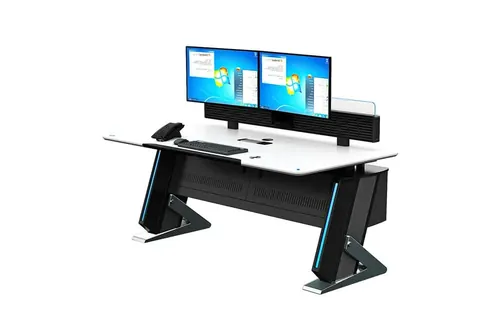
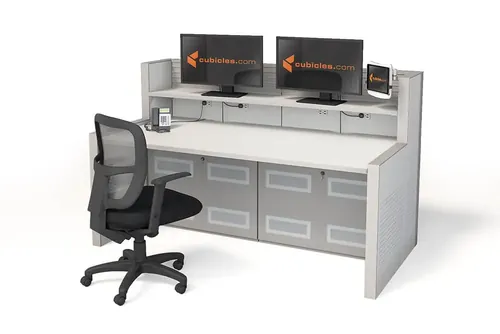
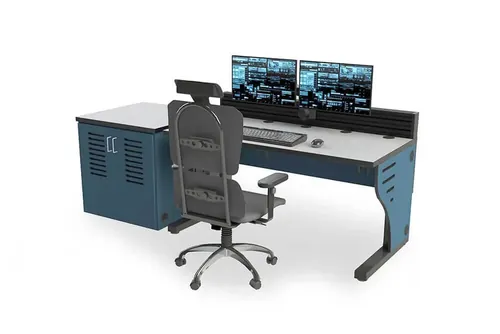
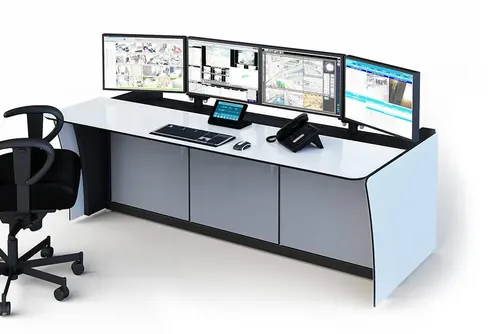
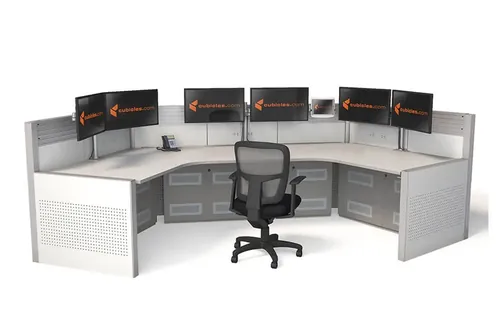
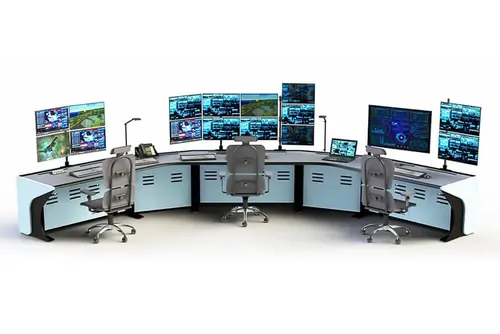
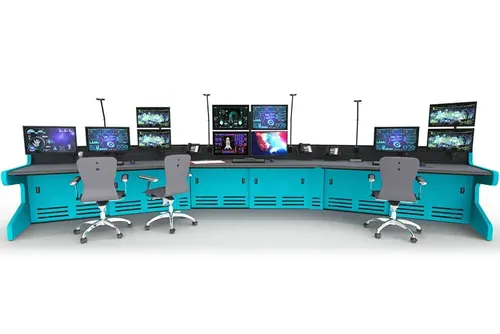
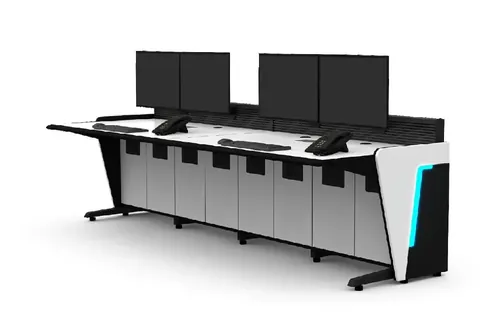
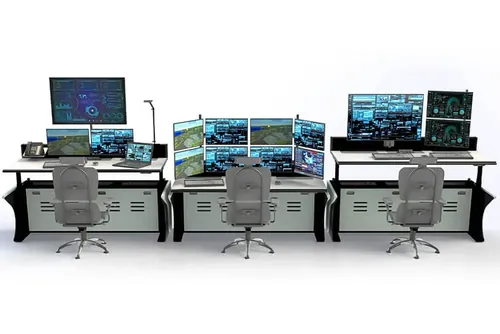
Here you will find a small selection of common, yet highly customizable typical control room console furniture examples. Whenever you are ready, we’re here for you. Our experienced team of professional interior workspace architects will help guide you through the exacting process of specifying furniture tailored to the exact needs of your operation.
We will ensure that all details are covered, and you get the space that will serve its purpose, providing uninterrupted operation for many years to come.
Control Room Consoles Static
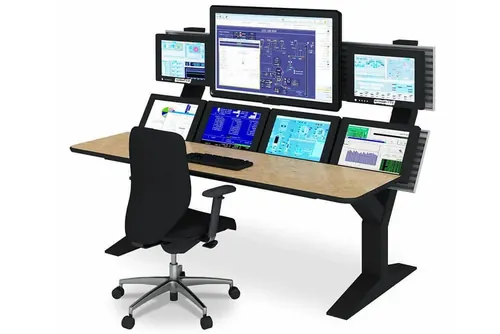
Control Room Consoles Height Adjustable
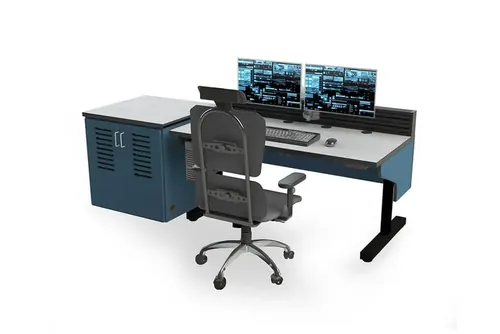
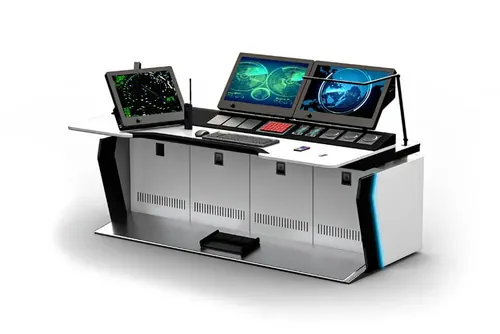
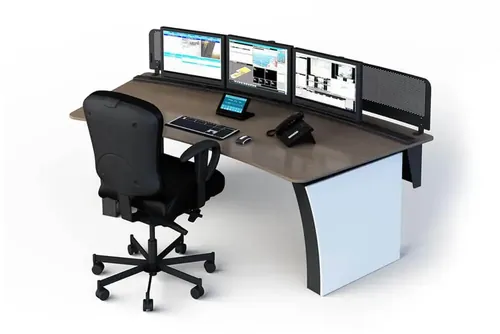
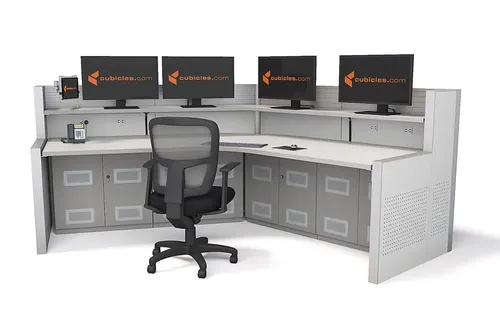
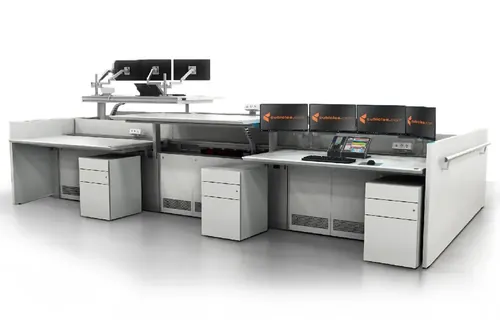
Trading Workstations
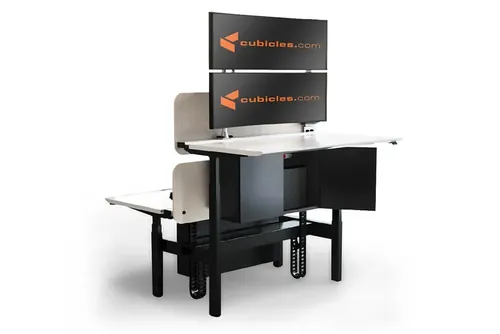
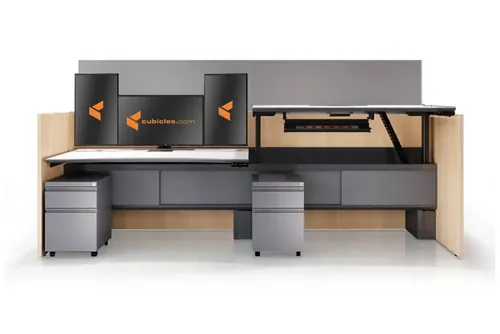
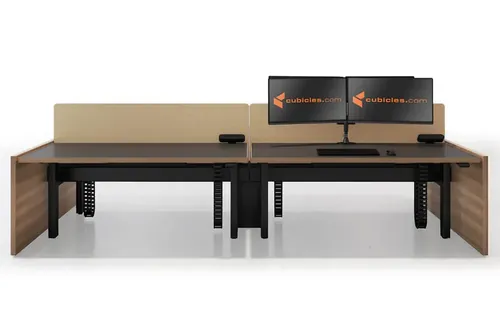
* INDICATES price upon request.
Mission Critical Definition
Mission critical facilities are broadly defined as containing any operation that, if interrupted, will cause a negative impact on business activities, ranging from losing revenue to jeopardizing legal conformity to, in extreme cases, loss of life. Data centers, hospitals, laboratories, public safety centers, and military installations are just a few of the many types of buildings that could be considered mission critical.
Operations center types:
-
SOC- Security operations center - centralized function within an organization employing people, processes, and technology to continuously monitor and improve an organization's security posture while detecting, analyzing, preventing and responding to broad range of security events, including computer, cyber, building, premises, etc.
-
NOC – Network operations center - a centralized place from which enterprise information technology (IT) administrators -- either internal or third party -- supervise, monitor and maintain telecommunications and data networks.
-
EOC – Emergency operations center - a physical space that functions as a centralized location to monitor and directly manage the coordination of emergency response teams and their activities. Many Governmental, nongovernmental and private sector organizations benefit from the building, utilization and maintenance of these ops centers.
-
JOC – Joint Operations Center – comprises of a series of spaces that include some, or all the above types of operations centers.
Role of Furniture in Mission Critical Facilities
(control rooms, and operations centers)
Furniture, Fixtures and equipment play a foundational role in the operational efficiency of mission critical environments. Professional space planning is the architect that drives success.
The specific work station configuration depends on numerous factors, starting with the application or type of operations center required. A business’ individual organizational structure, scope of required equipment, data inputs, power consumption, and of course the number of staff are just some of the factors that need to be considered during the design stage of an operations center.
These variables, among others will inform the type of furniture to be utilized in a command and control facility.
This Emergency Operations Center How-to Quick Reference Guide by The Federal Emergency Management Agency (FEMA) divides Emergency operations center design into 5 basic designs: Boardroom, Mission control room, Marketplace, Bullseye and virtual EOC or Virtual Emergency Operation Center.

In a Boardroom layout stations are organized in U-shape with the main visual display in the front of the room. This layout emphasizes collaboration and coordination.

In a Mission Control emergency operation center architecture eoc consoles are organized in rows or semicircles facing large visual Monitor wall displays. This layout roughly resembles a lecture hall and is ideal for technical tasks with fewer collaboration opportunities when compared to a boardroom. Typically, intra-office communications in this design is facilitated through incident management software applications.

-
Marketplace – staff is separated into function-specific groups, that emphasize collaboration among specialists, further coordinating information across groups.

-
Bullseye – stations are organized into concentric circles with key players sitting at the main table in center. It emphasizes the standing of the key players, but limit collaboration, and is highly space intensive, therefore not an ideal EOC layout.
Control Room Furniture CASE STUDY
• New York Police Department JOC •

This JOC (designed by the architectural firm of Shen Milson & Wilke) is comprised of an Operations Center, Watch Command and Situation Room alongside some support spaces (administrative office space, conference room, data center and police commissioner’s conference room. Office collaboration is crucial in police operations centers, making open plan benching stations the ideal solution.
The workstation layout ensures that each operator’s workstation desk has an unobstructed view of surrounding mission critical information displayed upon wall mounted monitor systems regardless of their seat.
Small desk dividers delineate individual control room workstations but are low enough for team members to have a view of their colleague’s desk and monitor for optimal collaboration.
These control room desks are clustered by using a center spine of panels that support worksurfaces and can carry data, communication and electrical power wiring comparably to how it is done with these traditional (non-NOC) benching stations.
Typically systems furniture optimized bench desks are connected to building power via electrical power infeeds that brings building power from a wall, the floor or from the ceiling using a power pole. In this JOCs, power was taken from the floor after a concrete floor drilling process to avoid any vertical structure that might pose a visual hinderance to the users.
The utilization of open plan benching stations grouped in clusters and with generous cable management allows for seamless data connections in a complex network of wiring to link all operation centers and individual operators into a high-speed multimedia and communications network.
The design prioritizes comfort and functionality, with ample legroom and clear sightlines to large monitor walls. Overall, this workstation layout and space planning design contribute to the a seamless visual flow that enhances the efficiency and effectiveness of operations.


In Marketplace setups staff are divided into function-specific teams, which requires a high level of collaboration between colleagues. These team members typically require ample worksurfaces and comfortable workstations that are strategically grouped.
U-shaped desks can be created by joining 2 L-shaped desks, providing users with large desktop worksurfaces for sufficient desk space. Essential personal underdesk storage can easily be added in the form of a pedestal or lateral filing cabinet. Depending on the specific requirement, adding a control room locker is another option.
Low desk dividers are used to demarcate the different stations and standard height frosted desk dividers create a minimal sense of privacy between U-shape desk clusters, but still allow for visual connection between users when seated.
Emergency Operations Center Layout CASE STUDY
• New York City Office of Emergency Management EOC •

Customized cubicle workstations offer a systematized and uncomplicated solution to an otherwise costly process.
The Office of Emergency Management in New York City reconstructed its headquarters after the destruction caused by the events of September 11, 2001.
This prominent Emergency Operations Center is a dedicated physical space that functions as a centralized location for the overall coordination of emergency response activities in New York City. In this OEM (office of Emergency Management) NYC’s Finest plans, coordinates and directs emergency efforts to keep the city safe and operational when infrastructure failures, accidents or threats of terror present themselves.
The 65,000 square foot building features essential facilities such as a 100-person Emergency Operations Center, Watch Command, Situation Room, General Office space, and a Press and Conference Center.

The Watch Command serves as the central hub of the - 24/7/365 - NYC OEM and is a great example of what is possible in collaborative work spaces.
Referred to as the "Heartbeat" of the facility, Watch Command engineers must always remain vigilant, utilizing a wide range of monitoring tools to identify potential issues and initiate coordinated responses to ensure the safety and security of the city.
To accommodate these specific and highly critical requirements, a hybrid of a Bullseye layout (a/k/a semi-circular office bullpen layout and the more prevalent Mission Control (linear clusters) office space planning standard was used.
This massive center oval shaped workstation is in a bullseye bullpen layout and consists of customized curved desks each with its own transaction counters configured into a concentric circle. It represents the OEM’s nucleus and emphasizes the idea of a central workstation that overlooks the more specific task oriented stations and functions as command-and-control of information flow.
While this unit is large and certainly takes up a lot of floor space, the concept can be executed non-control-room more typical office environment such as this.

The “Mission Control” oriented office layout consists of workstations organized into rows facing each other as well as informational monitor wall displays.
This layout is optimal for collaborative workflow among operators and allows teams to easily interact with each other and visually follow informational monitors while within proximity to central command workstation desktop operators.
An efficient solution to this task-driven operation are what appear to be traditional cubicle stations grouped in rows, each equipped with office desk pedestal storage units.
These control room cubicle stations are also equipped with a workstation cable management system that provides ample communication equipment connections, i.e. CAT5/6/7, multicore Co-ax, fiber, twisted pair, etc.
Overall, the layout and design of the Emergency Operations Center allows for efficient coordination and response to emergencies, enhancing the city's preparedness and safety measures.
Emergency Operations Center Floor Plan CASE STUDY
• Humberside Police’s Control Room EOC, UK •

The Hull Story back in 2022 reported that the Humberside Police relocated its control room to a state-of-the-art facility in Melton, marking a significant upgrade from its previous location. The purpose-built operational support center boasts a spacious 107,000 square feet office building layout plan spread over three floors.
Employees and management perceived the previous environment as fairly inhibiting with seven teams working in 13 different, secluded rooms, making collaboration between units tedious and laborious, to say the least.
This new emergency operations facility has been designed purposefully for the force control room and employs a fresh set of control room solutions.
Meticulously planned with input from staff, the new space accommodates various operational teams and specialist units, including major crime investigation, marine, search & rescue, and armed response units. It features cutting-edge technology, including a large 'media wall' for real-time CCTV monitoring, supporting swift and efficient responses to emergency calls.
In Marketplace set-ups staff are separated into function-specific teams which require a high degree of collaboration between colleagues. In this office layout floor plan, teams have been grouped together in fully equipped control station “pockets” in an open plan layout where workstations have been designed to create an organic office footprint.
These organic shapes were achieved by joining cubicle panels with cubicle desks at various angles, following semi-circular lines, thereby clustering colleagues in smaller groups, without any isolation between staff.
Some examples of this creative office cubicles design approaches can be found by viewing a few past projects:
-
Octagonal Collaborative Office Space Design Project # 369
-
Curvilinear Worksurfaces with Cubicle Partitions set at 120 Degree on Project # 157
-
Office cubicle workstation design @ 90 degree Project # 190
This office layout open plan yet interconnected workstation layout enables staff to work more efficiently as a single control room team, rather than individual and scattered departments.

Due to the high network connectivity demand, these data center workstations were custom designed with sufficient cable management capability and a desktop power module handy for any equipment requiring on worksurface pluggability.
To promote healthy work conditions for operators that have particularly stressful roles, some of the stations were equipped with ergonomic height adjustable desks making the switch from a seated to standing position as easy as the push of a button.

Talk about winning office layout ideas. This office bullpen marketplace set up supports cohesion among colleagues, promoting teamwork and efficiency in a spacious and interconnected layout. With an emphasis on collaboration and functionality, the new control room represented a significant step forward for Humberside Police in their mission to provide effective public service and safety.
Control Room Workstations CASE STUDY
• NYISO - NY Independent System Operator •
The NYISO’s headquarters is a mission critical facility that is responsible for New York state’s electrical grid’s power system reliability.

This custom designed and built office layout houses the Primary Control Center, War Room, Simulation Training, and a Visitor’s Gallery with views of the Primary Control Room.
The control room is a notable aspect of the facility, offering operators a comprehensive view of the entire State of New York power grid. This impressive visual tool is made possible through a custom-designed, software enabled specialized display solution allowing system operators to have an optimal and clear view of the power grid.

The control room furniture is configured into organic L-shaped, U-shaped, and V-shaped workstations that look upon a specialized control room video wall: an arrangement of 125 – 80” LED monitors in a 5 x 25 grid.
Each individual workstation is equipped with highly technical and specialized equipment and many monitors. Stations are powered from the floor, and cables carefully concealed inside the furniture to provide a clear view of the monitor wall from all angles.
The success of NYISO's headquarters lies in its specialized design focused upon functionality and tailored to its mission-critical task. The facility’s custom built office furniture and the infrastructure within and around it enables efficient monitoring and management workflows.
The utilization of advanced technology and specialized equipment allows NYISO's headquarters to serve as a vital hub for maintaining the stability and resilience of New York's electrical infrastructure.
Control Room Consoles CASE STUDY
• Penn Station Control Room •
Penn Station is a major terminal for the New Jersey Transit, Amtrack and the Long Island Railroad. Sitting below Madison Square Garden, the station serves approximately 600,000 commuters daily. During rush hour, a train arrives at a platform every 58 seconds.

Train station control rooms are typically arranged in a Mission Control room layout with highly equipped interconnected workstations.
Large L-shaped and U-shaped workstations are organized in rows facing a large monitor wall. Every workstation is packed with highly specialized control room equipment and provides each user with several of their own desk monitors.
Each individual U-shaped cubicle features under desk storage cabinets with advanced cable and wire management for this network intensive setup.
At each custom built highly specialized control room workstation operators can effectively monitor and manage the intricate network of trains arriving and departing from this bustling transportation hub. The busiest train station in the Country.
Control Room Ergonomics CASE STUDY
• Bay Area Rapid Transit Control Room •

Rail Operations Controllers play a pivotal role in ensuring the safe and efficient operation of transit systems like the Bay Area Rapid Transit (BART). Their workplace, the Operations Control Center (OCC), serves as the nerve center where critical decisions are made, and actions are coordinated in real-time.
Controllers stationed within the OCC encounter a myriad of daily challenges. From managing the flow of trains to troubleshooting unexpected issues, they must maintain focus and clarity amidst the fast-paced environment. Listen to insights into the Bart Operations Control Center daily workings on this podcast : “Go inside BART’s version of mission control”.
Command and control construction projects demand specialized technology desks that seamlessly integrate high-tech, promote comfort during long shifts and offer adjustable features to accommodate individual preferences.
As each day brings high-stakes performances and intense multitasking, the furniture within the OCC plays a crucial role in supporting controllers' productivity, comfort, and overall effectiveness. That is why the control room furniture within the OCC goes beyond mere aesthetics; it directly impacts controllers' ability to perform their duties effectively.
To meet the unique needs of Rail Operations Controllers, control room consoles provide ample workspace and integrated office storage solutions allowing controllers to keep essential tools within reach while minimizing clutter.
Rail Operations Controllers are the backbone of transit systems like BART, and their workspace must be equipped with ergonomic office furniture solutions that support their demanding roles.
By prioritizing comfort, functionality, and customization and investing in tailored furniture solutions these highly specialized control room console desks can significantly enhance controllers' performance and contribute to the overall safety and efficiency of transit operations.
Control Room Consoles CASE STUDY
Schiphol Airport Control Tower like all airports are mission critical facilities that manage inbound, outbound and withing air space air traffic. Operational excellence can be extremely difficult to achieve with consistency, nevertheless, is something the air flying public expects. Mistakes can be deadly.

A control tower in airport design typically has high equipment demands which need to be accommodated in a small footprint. An airport control tower has a 360 degree view of the terminal gates, runways and the airspace surrounding the airport. On a clear day, air traffic controllers can rely on their own physical visuals of their surroundings. State of the art control tower tech such as radar and specialized computer software systems are crucial when visibility is compromised.

Planes are handed over from one controller to the next as they move along the strip, forming a control tower supply chain; from pushback and taxiing to runway and liftoff, and conversely from landing, to taxiing and docking.
Tower and air traffic control tower floor plans have small footprints that need to accommodate highly customized operator stations that can display multitudes of informational monitors and radar screens.
The ideal workstations for an air traffic control tower interior are curved, dropped back style control room consoles, where monitors are positioned at a lower height than typical in today’s office desk modern genre. This unique monitor positioning enables controllers to have a clear view (above the monitors) of the airfield and its runways. The circular office layout and curved desks - not to mention advanced control equipment - play pivotal a role in ensuring the operational success of an airport control towers.

The control room furniture shown here can be purchased based upon a typical standard or specifically customized to your exacting requirements and dimensional specifications. Unique equipment, desired storage units and your specific accessories can easily be accommodated.
Watch this video to see the inside functioning of one of Europe’s busiest airports.
Benching Desks CASE STUDY
• Seattle’s Fire Station #10 EOC •
Fire department emergency operations centers are crucial facilities designed to efficiently coordinate emergency response efforts during crises.
As with other control room solutions first responder emergency operations center design typically feature a marketplace layout, where various workstations are strategically positioned to facilitate communication and collaboration among emergency personnel.
The layout often includes a central command area surrounded by individualized rows of control room desks for operators and supervisors. This arrangement creates a collaborative workflow and easy access to the information required for quick decision-making during critical situations.
The workstations within this command and control facility are equipped with state-of-the-art technology and specialized equipment tailored to the needs of emergency responders. Each operator workstation is outfitted with multiple monitors to display real-time data, including maps, live video feeds, communication devices such as telephones, 2-way radios, and intercom systems to facilitate seamless communication, intra-office and with those out in the field.
Other essential equipment can include dispatch consoles with integrated computer-aided dispatch (CAD) systems to efficiently allocate resources and coordinate emergency calls, fire alarm monitoring systems, weather monitoring stations, and video conferencing capabilities to communicate with external agencies and stakeholders.
Furthermore, emergency command center may include dedicated areas for training and simulation exercises to prepare personnel for various emergency scenarios. An ideal training room layout will include areas equipped with simulation software, mock incident scenes, and interactive training materials to simulate real-world emergencies and enhance response readiness.
Overall, fire department emergency operating centers are meticulously designed to serve as command hubs during emergencies, providing essential resources and support to first responders and emergency personnel.


Dispatcher Workstation CASE STUDY
• MBTA Operations Control Center (OCC) •
The MBTA Operations Control Center (OCC) serves as the nerve center of the Massachusetts Bay Transportation Authority (MBTA), where dispatchers work tirelessly to ensure the safe and efficient operation of transit services.
In 2022 the entire MBTA operation was moved to the newly constructed facility, named the Iron Horse, which has been equipped with a Positive Train Control (PTC) system to enable dispatchers to oversee and regulate train movements in the northern Boston area. The OCC plays a vital role in maintaining schedules, managing incidents, and coordinating transit movements across the Authority's network.
This facility serves as a vital component of a nationwide PTC network. The design of the facility emphasizes control room furniture custom-made to support dispatchers' demanding roles and the integration of technological systems featuring multiple Digital Management Systems (DMS).


This control room setup accommodates three shifts of dispatchers and combines enclosed dispatcher offices with an open office bullpen layout optimized for a 24x7 operations control room.
The MBTA control room consoles are equipped with the latest technology and supported by a dedicated team. Each dispatcher workstation is equipped with ergonomically designed desks and chairs ensure comfort during extended shifts, while a multiple monitor setup provides a clear view of a programmable wall screen within the room. Desk storage solutions are strategically incorporated to keep essential tools and documents organized and readily accessible. Natural light floods the control room from above, ensuring a glare-free environment conducive to effective operations.
In conclusion, the MBTA Operations Control Center stands as a testament to the Authority's commitment to operational excellence and passenger safety. Through strategic investments in staffing and technology, coupled with optimized control room furniture solutions, the OCC continues to play a pivotal role in delivering reliable and accessible transit services to the residents of Massachusetts.


World Famous Security Operations Centers
These Command and Control Centers play pivotal roles in managing military operations, crisis response, and national defense strategies in the United States and across the globe.
North American Aerospace Defense Command (NORAD) Cheyenne Mountain Complex - Located in Colorado Springs, Colorado, this underground facility is a combined organization of the United States and Canada that provides aerospace warning, air sovereignty, and protection for Canada and the continental United States. Until March 1981 it was known as the North American Air Defense Command.


United States Strategic Command (USSTRATCOM) Global Operations Center (GOC) - is one of the eleven unified combatant commands in the United States Department of Defense and is based in Offutt Air Force Base, Nebraska. USSTRATCOM is responsible for global nuclear deterrence, missile defense, and operating the Defense Department's Global Information Grid.


The Pentagon National Military Command Center (NMCC) - Situated within the Pentagon in Arlington, Virginia, the NMCC serves as the principal command and control facility (260/0.00/9/8) for the Department of Defense and Joint Chiefs of Staff.

Combined Air Operations Center (CAOC) - These centers are operated by NATO and various countries to command and control air operations in specific regions. Notable CAOCs include the Combined Air Operations Center at Al Udeid Air Base, Qatar, and the CAOC at Ramstein Air Base, Germany.

European Union Military Staff (EUMS) Operational Headquarters - Located in Brussels, Belgium, this facility coordinates military operations and crisis management for the European Union's Common Security and Defense policy.

NATO International Military Staff Bi-Annual Partners Meeting
United States Central Command (CENTCOM) Forward Headquarters - Based in various locations in the Middle East, including Qatar and Bahrain, CENTCOM's forward headquarters oversees military operations in the Middle East, Central Asia, and parts of Africa.

China's National Defense Command Center (NDCC) - This center in Beijing, China, is responsible for coordinating the People's Liberation Army (PLA) and overseeing China's military operations and national defense.
Russian National Defense Management Center (NDMC) - Situated in Moscow, Russia, the NDMC serves as the central command and control hub for the Russian Armed Forces, responsible for strategic planning and military operations.
United Kingdom Permanent Joint Headquarters (PJHQ) - Located in Northwood, London, PJHQ is the central command and control facility for the British Armed Forces, responsible for joint military operations worldwide.
Israel Defense Forces (IDF) Kirya Command Center - Situated in Tel Aviv, Israel, the Kirya Command Center serves as the IDF's central operational headquarters, overseeing military operations, intelligence, and national defense.
CONCLUSION
Custom control room furniture along with professional space planning is an integral component of a well-planned command and control solution that extends beyond mere aesthetics.
With the high complexity and costs associated with these environments, detailed planning and an expert understanding of current and future needs are crucial for a successful modern control room design. The type and configuration of custom control rooms depend on various factors, including the specific application, required equipment, organizational structure and staffing levels.
Each type of control room, whether it be for a security operations center design or mission critical data center requires customized furniture to meet its unique operational demands. When planning mission critical facilities such as a network ops center, or a joint operations center or if you are planning a emergency operations center layout you must be aware of emergency control centre requirements down to the finest details.
The role of furniture in a command and control facility cannot be overstated. Whether a boardroom layout accentuating collaboration, a mission control setup for technical tasks, a marketplace design for function-specific teams, or a bullseye arrangement for key player emphasis, the furniture must align with the specific needs of each operation center.
Through careful planning and site specific customization emergency operations center furniture solutions can enhance operational efficiency, team member coordination and foster effective responses in any mission-critical environments.
The included case studies highlight the importance of specialized control room consoles furniture in facilitating efficient operations. From open-plan benching stations for seamless communication to curved, dropped-back consoles for clear sightlines, each furniture solution is tailored to the unique requirements of its respective control room.
With ergonomic designs, advanced technology integration, and meticulous attention to detail, mission-critical furniture solutions contribute significantly to the success of operations centers in various industries, ensuring preparedness, safety, and effective response in critical situations.