
Arnold Swarcheneger's Office Furniture 5336
The Office Cubicle (14,800 / 53 / 100). For many, the very phrase conjures images of beige walls, fluorescent lighting, and a sense of isolation. Born from a desire for efficiency and a degree of personal space in the burgeoning corporate landscapes of the mid-20th century, the cubicle has become an enduring, if often maligned, symbol of modern work. Its journey from revolutionary design to a subject of both ridicule and surprising resilience is a fascinating exploration of workplace evolution.
Ready to upgrade your office cubicles?
Explore our range to create a workspace that enhances productivity, privacy, and employee well-being.
Office Cubicles 14800
-
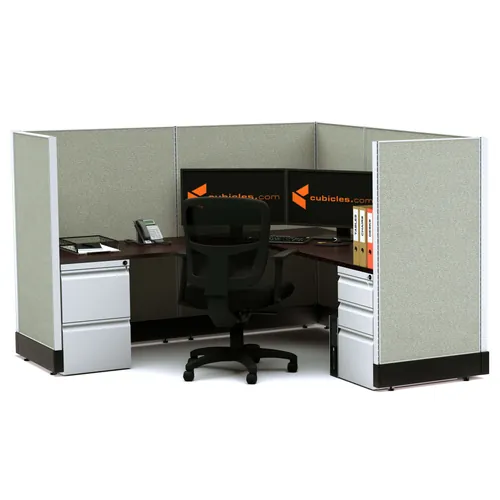
Office Cubicles 53H Single
-
Office Cubicles 53H 2Pack Inline
-
Office Cubicles 53H 2Pack Cluster
-
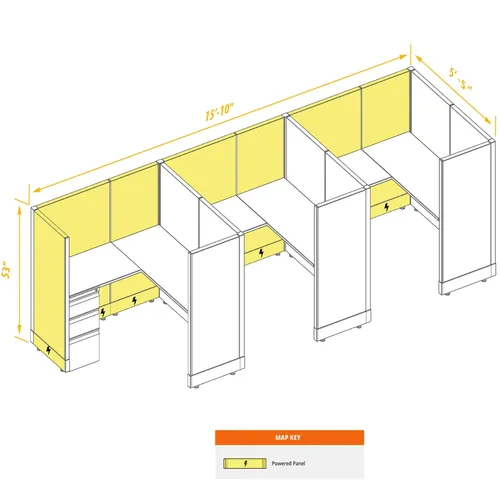
Office Cubicles 53H 3Pack Inline
-
Office Cubicles 53H 4Pack Cluster
-
Office Cubicles 53H 6Pack Cluster
-
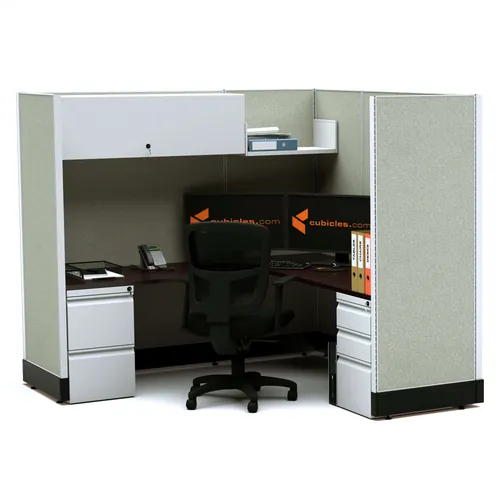
Office Cubicles 67H Single
-
Office Cubicles 67H 2Pack Inline
-
Office Cubicles 67H 2Pack Cluster
-
Office Cubicles 67H 3Pack Inline
-
Office Cubicles 67H 4Pack Cluster
-
Office Cubicles 67H 6Pack Cluster
Call Center Office Cubicles 320
-
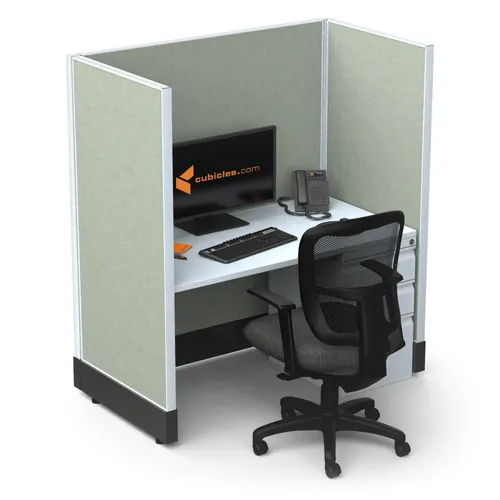
Call Center Office Cubicles 53H Single
-
Call Center Office Cubicles 53H 2Pack Inline
-
Call Center Office Cubicles 53H 2Pack Cluster
-
Call Center Office Cubicles 53H 3Pack Inline
-
Call Center Office Cubicles 53H 4Pack Inline
-
Call Center Office Cubicles 53H 4Pack Cluster
-
Call Center Office Cubicles 53H 6Pack Cluster
-
Call Center Office Cubicles 53H 8Pack Cluster
Used Office Cubicles
-
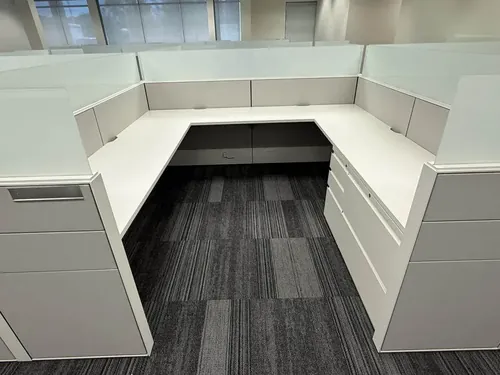
Haworth Compose 8x8 Used Cubicles
-
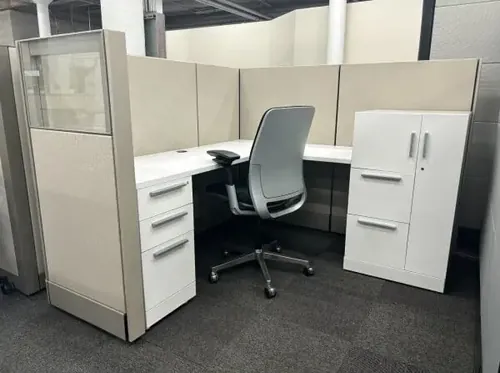
Herman Miller Ethospace 6x6 Preowned Office Cubicles
-
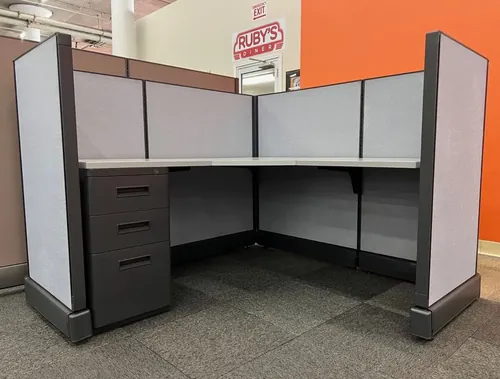
Herman Miller AO2 5x5 Used Cubicles
-
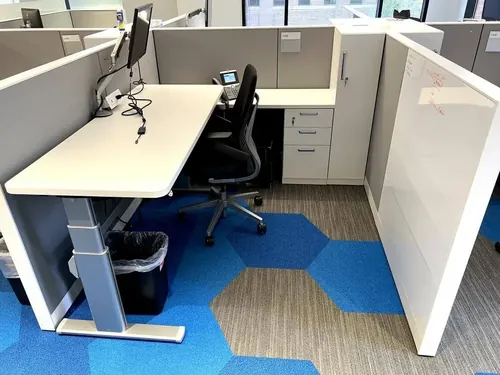
Steelcase Answer 6x7 Used Cubicles
-
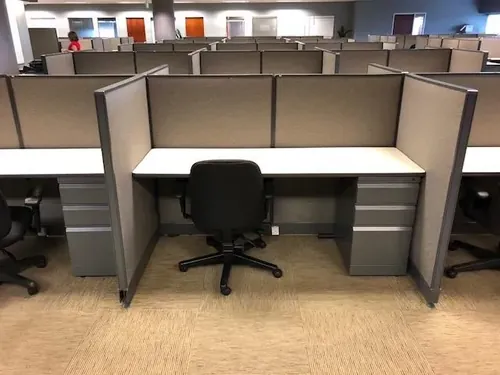
Haworth Unigroup 6x3 Used Cubicles
-
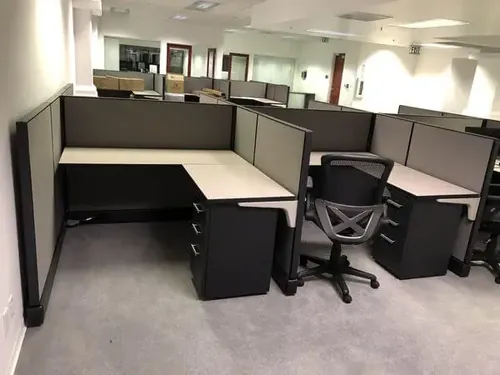
Friant System2 5x5 Used Cubicles
-
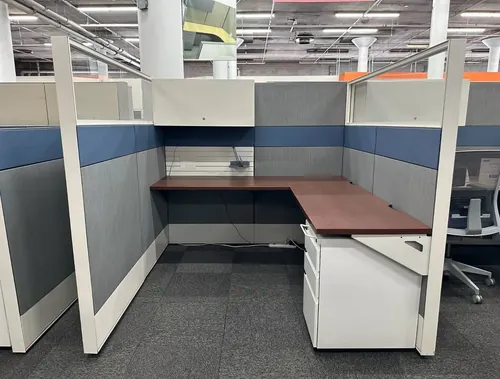
Haworth Compose Cherry 6x6 Preowned Cubicles
-
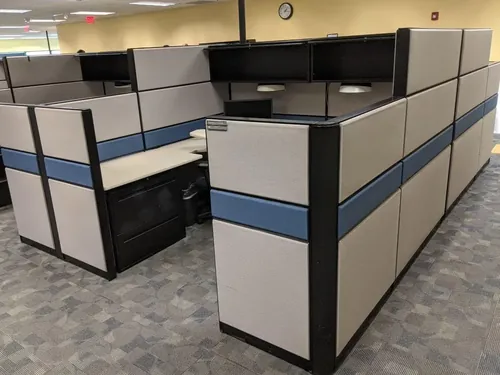
Teknion TOS 90x90 Used Cubicles
 The Genesis of a Revolution: Robert Propst and the "Action Office"


The story of the cubicle, in its most foundational sense, truly begins with Robert Propst and his groundbreaking “Action Office” concept. Developed under the innovative auspices of Herman Miller in the 1960s, Propst, a visionary designer and inventor, was deeply and genuinely concerned with the inherent inefficiencies and often dehumanizing aspects of the prevailing traditional open-plan offices of the era. These arrangements frequently forced employees into rigid, undifferentiated rows of identical desks, offering virtually no privacy, little personalization, and a distinct lack of individual autonomy.
Propst’s initial vision for the Action Office was, for its time, nothing short of radical: a flexible, highly modular system meticulously designed to empower individual employees to customize their workspace precisely according to their specific needs and tasks. His core philosophy was not about creating mere boxes or restrictive enclosures, but rather about liberating and empowering individuals, fostering creativity, and improving overall productivity by providing adaptable environments. The earliest iteration of the Action Office, particularly the AO-1, was a stark contrast to the stereotypical cubicle that would later become so pervasive. It featured diverse heights, integrated Standing Desks (201,000 / 78 /100), and a far more organic and fluid flow, explicitly prioritizing movement, dynamic adaptability, and visual stimulation. This was an office system built around human needs, not just space maximization.
However, the AO-1’s more nuanced, sophisticated, and consequently more expensive design proved challenging to scale for the burgeoning mass market that was emerging. It was the subsequent iteration, the AO-2, which, while still ostensibly emphasizing flexibility and user adaptability, leaned more heavily into the enclosed, partitioned workstation design that we readily recognize today. This pivotal shift was largely driven by overwhelming corporate demand for greater cost-effectiveness, ease of manufacturing, and the simple, rapid reconfigurability of standardized workspaces. The term "cubicle" itself, originally derived from the Latin "cubiculum" meaning a small sleeping chamber, gradually began to be applied to these partitioned office spaces, eventually becoming inextricably synonymous with the product itself.
The Golden Age of Efficiency: Cubicles Take Over Corporate America


The 1970s and 80s witnessed an explosive proliferation of the cubicle across corporate America. Businesses were experiencing unprecedented rapid expansion, and the cubicle offered what appeared to be a perfect, highly efficient solution for housing a continuously growing workforce within finite physical spaces. Its inherently modular nature meant that entire office layouts could be swiftly reconfigured to seamlessly accommodate departmental shifts, team reorganizations, or the influx of new projects and personnel. Critically, it offered a degree of personal privacy that the completely open-plan offices conspicuously lacked, allowing individuals to concentrate on their work without constant visual distractions or the feeling of being constantly observed.
For a vast number of employees, the installation of cubicles represented a significant and tangible improvement over the previous, often unshielded rows of desks that characterized earlier office designs. Each cubicle, however modest in size, represented a personal domain, a miniature territory that could be decorated with cherished family photos, vibrant potted plants, and other small, personal touches, thereby injecting a much-needed sense of individuality and warmth into what could otherwise be a sterile and impersonal corporate environment. This era also saw the profound rise of highly specialized applications, such as dedicated Call Center Office Cubicles (320 / 35 / 99). These were ingeniously designed not only to maximize employee density within limited footprints but also to provide crucial acoustic separation, minimizing noise bleed in environments where constant phone communication was the primary function. The ubiquity of the Office Cubicle Desk (2,400 / 43 / 99) became unquestioned, a standard feature tailored to fit within the predefined dimensions of each workstation.
The Inevitable Backlash and the Seductive Return of the Open Plan


Yet, as the cubicle became truly ubiquitous, its inherent drawbacks and limitations also became increasingly apparent and widely discussed. The very features that were initially lauded as advantageous—the high, opaque walls, the standardized and often monotonous design—began to feel distinctly oppressive and confining. The pervasive lack of natural light, the often drab and muted color schemes, and the relentless repetition of identical units contributed significantly to a growing sense of depersonalization, isolation, and even outright ennui. Despite the physical partitions, noise remained a significant and irritating issue, with conversations carrying effortlessly over walls, and the constant hum of office equipment creating a pervasive and distracting cacophony. It was during this period that the evocative and often pejorative phrase "cubicle farm" emerged, conjuring a vivid image of workers confined and rendered indistinguishable, a far cry from Robert Propst's initial, optimistic vision of an empowering, flexible, and human-centric environment.
The 1990s ushered in a burgeoning and increasingly vocal backlash against the cubicle. Pop culture seized upon its symbolic power, satirizing it relentlessly and depicting it as the quintessential embodiment of corporate drudgery, stifling conformity, and soul-crushing boredom. Iconic movies like "Office Space" indelibly cemented its negative public image, portraying it as a place of mind-numbing repetition, bureaucratic absurdity, and severely stifled creativity. This period simultaneously witnessed the powerful emergence of a new and captivating design philosophy: the emphatic return to the Open Plan Office (720 / 78 / 3). These new layouts were enthusiastically touted as inherently promoting greater collaboration, fostering spontaneous interactions, and cultivating a more vibrant, dynamic, and ostensibly creative work environment. The compelling allure of transparency and the promise of serendipitous, collaborative encounters led a multitude of companies to dismantle their cubicle walls with gusto, eagerly embracing a more communal and seemingly progressive workspace.
However, as is often the case in design and social trends, the pendulum eventually began its inevitable swing back. The open-plan office, while initially celebrated with almost utopian fervor, soon revealed its own distinct and often debilitating set of challenges. The very collaboration it sought so earnestly to foster often came at the steep expense of individual focus and deep work. Constant ambient noise, a complete lack of privacy for confidential conversations, and the pervasive, unsettling feeling of constantly being "on display" led to new and insidious forms of distraction and heightened stress levels. Employees frequently found themselves actively seeking out secluded quiet corners, donning bulky noise-canceling headphones, or even retreating to remote work locations, ironically recreating the very isolation and focused environment that the cubicle had once so effectively provided. The grand promise of enhanced creativity and spontaneous innovation often dissolved into a chaotic, noisy environment where sustained, deep concentration was nearly impossible to achieve.
The Cubicle's Resurgence: Modern Adaptations and the Hybrid Frontier


This brings us to the contemporary understanding and evolving role of the Office Cubicle (14,800 / 53 / 100). It has not, contrary to earlier predictions, entirely disappeared. Instead, it has undergone a significant metamorphosis, adapting to new demands and, in many cases, experiencing a quiet yet discernible resurgence, often manifesting in far more refined, aesthetically pleasing, and thoughtfully designed forms. Modern Cubicles (1,300 / 30 / 100) are frequently lower in height, strategically allowing for greater ingress of natural light and promoting better visual connection across the office space, while still offering crucial acoustic and visual privacy when needed. The materials used are far more varied and sophisticated, often incorporating elements like clear or frosted glass, warm wood accents, and softer, sound-absorbing fabrics to create environments that are significantly less sterile and far more aesthetically inviting. The design emphasis has subtly but profoundly shifted from simply partitioning space to creating dynamic "focus zones," "Office Phone Booths" (2,900 / 52 / 100) or "concentration nooks" within a larger, more varied, and intelligently designed office landscape. The integration of a truly ergonomic and highly adaptable Office Cubicle Desk (2,400 / 43 / 99) is now a fundamental consideration, moving far beyond a simple flat surface to support diverse work styles and technological needs. Intriguingly, some contemporary designs even feature an Office Cubicle with Sliding Door (720 / 16 / 100), offering an immediate yet flexible option for enhanced privacy without the full commitment or cost of a traditional, fully enclosed private office.
The seismic shift towards hybrid work models, dramatically accelerated and normalized by the global COVID-19 pandemic, has further complicated and reshaped the office landscape. As fewer employees are physically present in the office on a daily basis, the traditional model of a dedicated, assigned cubicle for every single employee becomes less economically viable and functionally necessary. However, the undeniable need for quiet, focused work areas when employees are in the office remains absolutely paramount. This evolving dynamic has led to a renewed and greater appreciation for the cubicle's inherent ability to provide a consistent, predictable, and private workspace crucial for tasks requiring deep concentration and minimal interruption. Consequently, forward-thinking companies are now actively exploring a sophisticated blend of open, collaborative areas for team interactions, readily reservable private offices or "Hoteling Stations" (210 / 42 / 10) for individual focused work, and more relaxed, comfortable lounge-style spaces designed for informal meetings and rejuvenation.
The future of the Office Cubicle (14,800 / 53 / 100) is unequivocally one of continued adaptation, intelligent integration, and perhaps a more specialized role. It will likely not dominate office design as ubiquitously as it once did, but it will undoubtedly continue to play a vital and indispensable role in providing essential elements of privacy, acoustic control, and focused concentration within the evolving ecosystem of the modern workplace. Contemporary office designers are increasingly embracing the concept of "activity-based working," a flexible paradigm where different types of tasks are intentionally supported by different types of meticulously designed spaces. In this highly dynamic and adaptable model, the cubicle, or its thoughtfully modernized iterations, transforms into one crucial and valuable tool within a diverse and comprehensive toolkit of workspaces, meticulously crafted to cater to the incredibly varied and ever-changing needs of a highly dynamic and increasingly distributed workforce.
Ultimately, the complex and often surprising journey of the cubicle profoundly reflects the ongoing and perennial quest to find the optimal and often elusive balance between fostering vibrant collaboration and enabling deep concentration, between maximizing organizational efficiency and prioritizing individual well-being in the modern workplace. From Robert Propst’s initial, genuinely visionary “Action Office” to the much-maligned "cubicle farm" of the late 20th century, and now to its current, more nuanced, and thoughtfully integrated applications, the cubicle remains an enduring testament to the persistent challenges and continuously evolving solutions in the intricate design of where and how we work. It may never achieve universal adoration, but its undeniable and enduring presence serves as a powerful reminder that sometimes, even a seemingly small enclosure, defined by just three walls, can provide a surprisingly valuable and necessary sense of personal space and productive solitude.